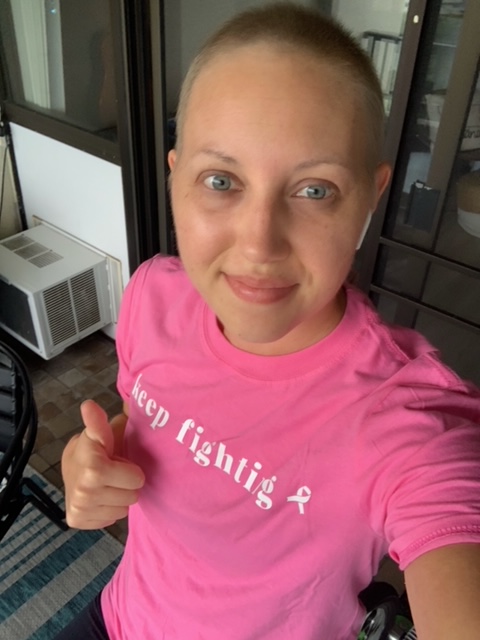
Happy New Year!

Happy New Year!

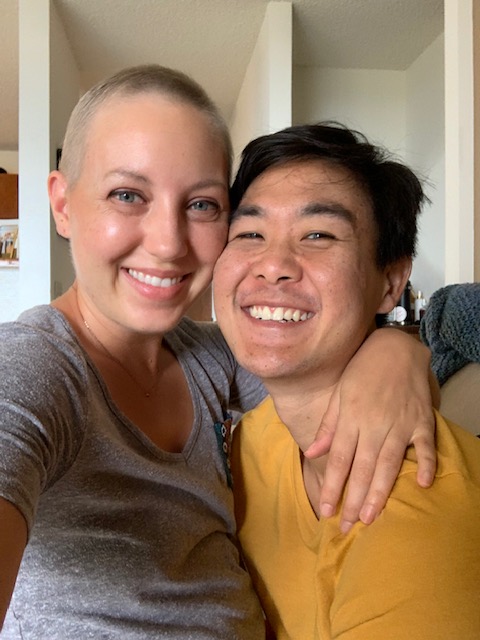
Well, we did it. We made it through 2020, a year no one could have ever expected. A year that we were all “safer at home” and “socially distanced.” A year in which we all struggled as a collective against a common enemy and were challenged on a personal level as well.

It’s easy to look back on this as a very difficult year, but for me it was also a year of major growth, learning, and finding love. Love for myself, my partner, my family and friends, and even for strangers. A year to prioritize my health, both physically and mentally. A year to allow many tears and also to find joy in the most ordinary of days.

I’m actually unable to hold back tears thinking of all we went through this year with such little reprieve. To go through cancer on top of it all was just ridiculous, honestly. So, I am grateful to sit here and reflect on the highs and lows of 2020. I am even more grateful to be able to look ahead to the ordinary joys, the eventual hugs, and the lessons that 2021 will bring.

I know I’ve mentioned this before, but on my 30th birthday last year, I kept feeling that 2020 would be a big year. Not like the “best year ever” kind of year, but the kind where you’re challenged in all the important ways. I usually decide on a word that symbolizes my intentions for the year, and I just couldn’t pick one last year, but as the second quarter of the year began with COVID and a cancer diagnosis, I found myself always coming back to a Japanese phrase I learned a few years ago:
And so that’s what I’ve done this year. I just kept putting one foot in front of the other and doing the best I could to get through each day. Trust me, some days were better than others and there were many days that I had to ask for help. So to those of you who prayed for me, who let me cry with you on the phone, who laughed with me on zoom calls, who sent cards and letters, who wore masks & socially distanced to protect the immunocompromised – I am incredibly thankful for you.

A few highlights from this year:
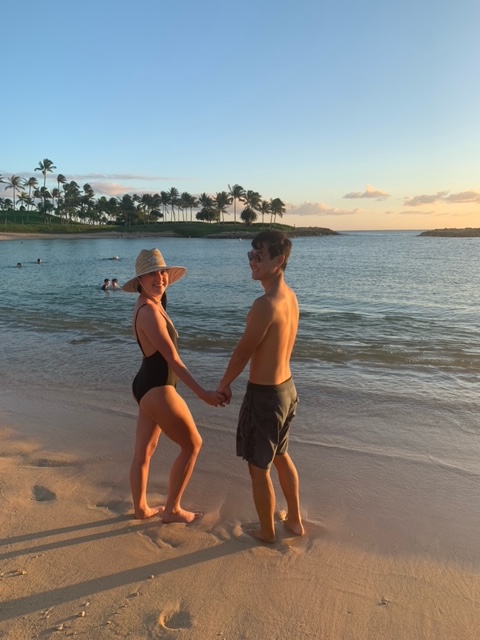
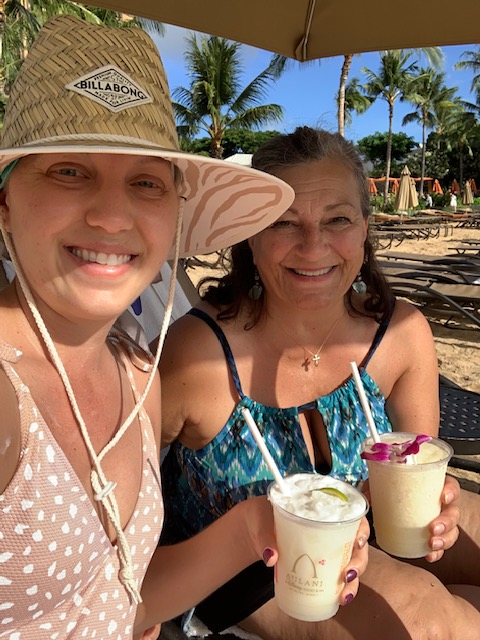
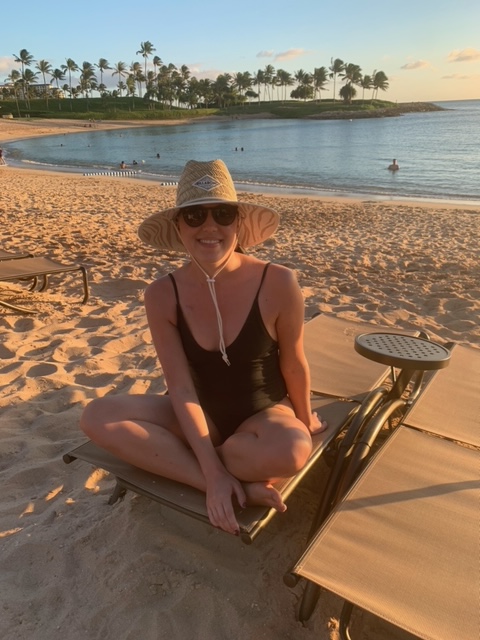
Getting to spend a whole month with my mom in Hawaii. Staycations. Cooking at home and learning new recipes. Being outside more often. Meeting new people (mainly my excellent medical team and an incredible group of cancer thrivers). Growing closer to my husband as we rounded out our second year of marriage and head into our third. Working on my Pilates certification. New babies. Friends getting married. Learning my own strength.

I won’t dwell on the lows, but I will remember how much I learned from them. This year my word is JOY. I hope to find more joy in each day, be more present, and celebrate every little victory. There will be setbacks, I’m sure of it, but if I’ve learned anything this year, it’s that they can be overcome. Wishing you all a happy, healthy, safe new year and sending you so much love and gratitude.

Cheers to 2021! ❤
A Fertility Update

A Fertility Update

How it’s going…

You may remember me posting a while back about the different ways I tried to protect my fertility as I prepared to start chemotherapy. First, I froze some eggs. In case I’m unable to conceive naturally later, I can use them for IVF. I also started monthly Zoladex injections – a medication that halts ovarian function in an attempt to preserve fertility overall.

And so, at age 31, I’ve been in a Zoladex-induced menopause since June. Six whole months later, my estrogen levels have tanked and my joints ache like I’m an 100-year-old lady! Some other fun side effects include amenorrhea (lack of a period), hot flashes, and dyspareunia. So, I’m currently staying as active as possible (mostly walking and stretching when I have the energy) in order to mitigate some of those side effects, and thankfully, my oncologist and I decided it was time to discontinue the Zoladex now that the bulk of treatment is behind me. Today marks one month since my last injection!

For more detailed info about fertility preservation, you can read my earlier post here.

What to expect now?

Typically, the menstrual cycle can take a few months to return as the body figures out its new normal once again. As I have some previous experience with amenorrhea after I came off the birth control pill in 2019, I know that what I eat will play a huge role in how quickly my body gets back to normal. Thus, the plant-based diet continues (plus no dairy, processed sugars, or alcohol) and I will try my absolute hardest to cut back on caffeine to keep my nervous system calm.

I also plan to use seed cycling to help my body regulate the essential hormones it needs for menstruation and ovulation. This is a great article about how to do seed cycling if you’re interested in learning more. Seed cycling is an excellent, natural way to balance hormones, however if you have hormone-positive cancer, please ask your doctor if a daily dose of phytoestrogens is safe for you!

Once I’ve completed radiation therapy, I’ll speak with my medical oncologist and OB/GYN about when it will be safe to start trying to conceive. With that said, I think my body deserves a long break to heal completely before that all happens. Actually, this might be a good time to kindly remind you that it’s just not acceptable to ask a person when they plan to have children. A person’s body is their own to make decisions for and, sometimes, people aren’t capable or willing to have children at all.

My goal for this blog has always been to be as open and honest about my experiences as possible in the hopes that whoever may be reading this can gain some insight for their own health and wellness. Personally, I don’t think there’s ever TMI (too much information) disclosed when it comes to learning about your own body and how it works. This coming from a pelvic floor PT who talks about poop all day… Anyway, I’d love to know what questions you have about:

  • fertility preservation during cancer treatments
  • long-term side effects of the birth control pill
  • nutrition around hormone balance
  • seed cycling

Drop your Q’s in the comments below!

Rad.

Rad.

I had my consultation with my radiation oncologist yesterday which went well. Dr. Tsuji spent well over an hour with me taking my history and explaining the process and side effects of radiation therapy. It’s always extra comforting when a physician comes in having already reviewed your chart and having an individualized plan in mind.

Although I had an excellent response to chemo and the post-surgical pathology shows that there was no residual cancer in the tumor bed or the lymph nodes, radiation is important with breast-conserving surgeries to get rid of any cancer cells that may remain in other areas of the breast that weren’t removed (as they would have been in a mastectomy). So, Dr. Tsuji recommends 4 weeks of whole-breast radiation (no axillary radiation since nodes were clear) with a boost to the tumor bed. After everything’s been set up, I’ll go for radiation 5 days per week, likely starting the 2nd or 3rd week of January.

Birthday stay-cation! Thankful to have many options to “get away” in Honolulu!

The side effects of radiation therapy are fatigue, which generally increases as the treatment progresses, and skin irritation which is basically like a bad sun burn. With radiation to the breast, the radiation oncologist takes as much precaution as possible to minimize radiation to the lungs and the heart. One way to protect them is to perform a breath hold during the treatment to raise the breast tissue away from the organs as the lungs expand and so we may see how that goes when I do my simulation in a few weeks.

I also need to be sure my left arm range of motion improves before I can start radiation since I’ll likely be positioned lying on my back with my hands behind my head. I can get there now, but it’s not at all comfortable due to the cording. My PT did work on it last week and it got significantly better after just one treatment, but it’s not quite there yet so I have some goals in the next few weeks!

I’ll see my oncologist on Thursday for a post-surgical follow up and planning and will see my surgeon after that to have my bandages removed from my port surgery. Thankfully, all is going well and everything is healing up nicely. Overall, I’m feeling well but definitely looking forward to being able to be more active again. I’m thankful to be on the last stretch of treatment and starting the new year cancer free!

Aloha ❤

Birthday Week

Birthday Week

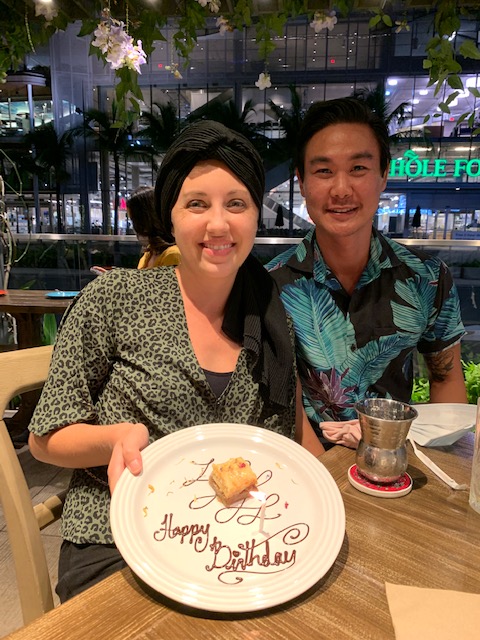
Yesterday was my 31st birthday, and I’ve been feeling so grateful to have made it to this day. I can remember the night before my 30th birthday last year so vividly, and I just knew that this year would be big in so many ways. It has been one of the most challenging years for me personally, as well as physically, but I have learned so much about myself and Justin and I have grown deeply in our relationship. With that said, all the learning was great, but I’m ready to leave 30 in the dust. This year, I’ll celebrate my birthday, looking forward to the year ahead (cancer free!) and I’ll celebrate all that I’ve accomplished this year with the help of everyone I love.

We had a great time celebrating my birthday yesterday (my mom always knows how to make birthdays very special), but this morning, Justin & I dropped her off at the airport even though I tried really hard to convince her to move here (or at least stay through Christmas). It was so nice to have her here and we were able to have plenty of good dinner chats, walks, coffee dates and couch parties binging Schitt’s Creek. I’m looking forward to getting back to Montana next year sometime to see her and the rest of the fam again.

Mama ❤

I went to take my 3rd COVID test today. I needed to do a rapid test because – surprise! I am having my port removed tomorrow! I had really been hoping this would have been removed with my lumpectomy, but it was left just in case there was any residual cancer or other IV treatment required. So tomorrow that little guy is coming out, and I don’t think I’ll miss it!

I’ll have a consultation with my radiation oncologist on Monday next week and will decide on a plan for radiation. I will likely need several weeks of radiation to eliminate any rogue cancer cells (should they exist) in the breast tissue that was not removed during surgery. I’ll update as I know more.

Otherwise, I’m still recovering from surgery (today I’m 2 weeks post-op). Swelling has been less in my arm, but I am developing a “cord” which I can feel from my armpit to my wrist. Cording, also known as axillary web syndrome, is common after a lymph node removal procedure and is a sign of scarring along a lymphatic vessel. It is thankfully treatable, but right now it’s painful and limits my range of motion in my left arm. I’ve been working on some lymphatic drainage techniques including lymphatic massage and exercise, and I think that as my shoulder mobility improves and I can get in to see my PT, the cording should resolve.

Delicious birthday din at Istanbul!

With Christmas only a few weeks away, Justin & I are busy putting gifts together (I am always a last minute gift buyer) and preparing for the end of the year. I am hoping to be able to transition back to some light duty work until I can treat patients again so we’ll see what happens with that. I may update a little bit on the blog over the holidays, but will likely be a bit quiet, so I hope you all have a safe and wonderful holiday season with your families!

Aloha ❤

P.C.R.

P.C.R.

Today is December 1. The first day of the last month of the absolute craziest year of our lives AND the start of birthday month! Thought I’d give you a little update on surgery and the excellent news I received today.

Thankful.

Last Friday, I had a lumpectomy and sentinel lymph node biopsy. I checked in at 5:30 am, had wires inserted into my tumor and into the lymph node that was “suspicious” at the time of my original diagnosis. My radiologist placed these wires guided by ultrasound imaging. Once the wires were securely in place, I was sent to nuclear medicine for lymphoscintigraphy. A radioactive tracer dye is injected near the site of my tumor and imaging is used to identify the first lymph node to which the tumor drains so it can be removed during surgery.

During surgery, the nodes are removed first and sent for preliminary pathology while the surgeon removes the tumor and a small margin of tissue. After surgery, the nodes and tumor are examined in more detail by the pathologist for any remaining cancer cells.

My preliminary pathology on the lymph nodes was negative and today (post-op day 4) my formal path report came back and indicated what’s called a pathologic complete response (PCR). PCR means that no residual cancer cells were found in the tumor bed or in the lymph nodes at all – CANCER FREE! PCR occurs in about 30% of people who have triple negative breast cancer (according to my surgeon), and this is absolutely the best possible outcome I could have asked for! I hope you’ll all celebrate with me this week.

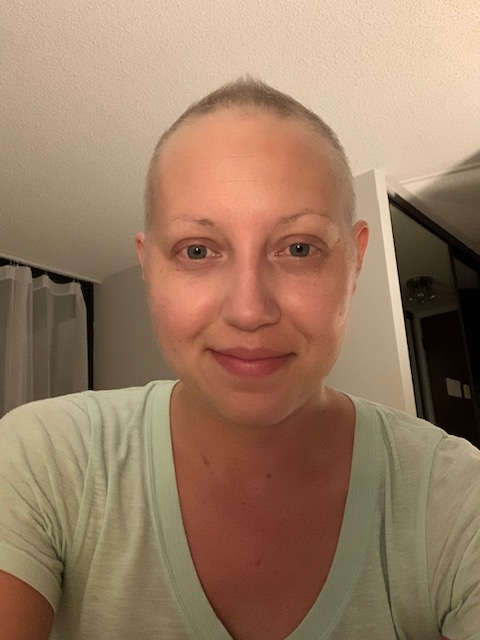
5 1/2 weeks post-chemo hair growth!

As far as recovery from surgery, everything is going pretty well. Pain and swelling are both mild. I was instructed to leave my bandages on until my follow up with my surgeon on Thursday this week. I’ve been doing some really basic range of motion exercises for my neck, shoulder blades, elbow and wrist to help move the lymph and prevent any significant stiffness. My PT & lovely coworker suggested I don’t lift my left arm above shoulder height for the first several weeks to allow the lymphatics in my armpit to heal and try to prevent axillary cording (which I’m at higher risk for) and lymphedema (which I’m at lower risk for).

Just want to say another quick THANK YOU to all of you who’ve supported me and prayed for me. God is good, and I am so relieved by the pathology results. Next step is radiation, and I should find out more this week about what that may entail.

**Quick reminder: December 1 means it’s time to check your chest – do your self-exams and schedule your preventative screenings!

#FeelItOnTheFirst

Sending alllll the aloha to you all today ❤

GratiTuesday

GratiTuesday

It seems like time is moving so slowly some days during this pandemic, and yet here we are in Thanksgiving week already. Though 2020 has had it’s detours, I can honestly say there has been more to be grateful for this year than ever.

Yesterday, I went in for my pre-surgery blood work and COVID testing. In all honesty, my white count was still quite low and I was pretty sure we were going to have to bump my surgery, but my surgeon and oncologist agreed that it’s high enough to proceed on Friday so today, I’m most grateful not to have to delay. My COVID test was also negative – not surprising since I never go out without a mask on or practicing social distancing. That immunocompromised life, though…

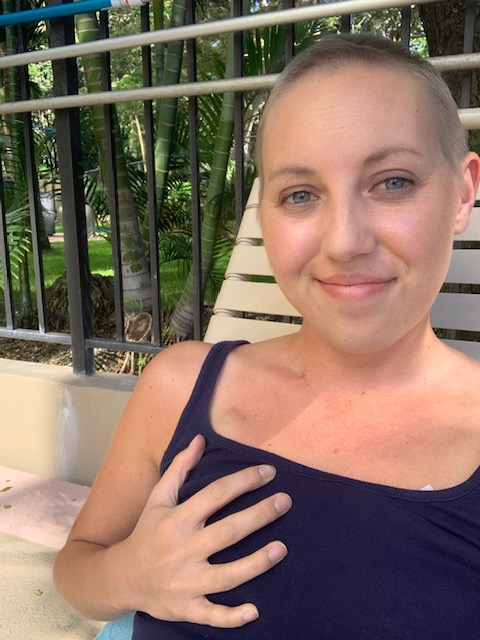
Peep that 4-week post-chemo hair growth!

My mom has been here for a little over a week now and it’s been so nice having her here. Thankfully, she’s been up for trying all of our vegan cooking, walking almost daily, and watching plenty of The Crown and Holiday Baking Championship. We were lucky enough to be able to have a little stay-cation at Aulani Resort thanks to my mom’s colleague, and we had a really nice time relaxing by the beach and pools.

I know that it would be easy to look back on the last 9 months and say what a shit show this year has been between COVID restrictions and a cancer diagnosis, but what I’d rather remember from this year is the simple, day-to-day moments that are the true blessings in life.

I’m grateful for the way my husband has stepped up more than I ever could have expected he would after my diagnosis (I should have known better, though…he’s the best person I know).

I’m grateful for my my mom calling and FaceTiming with me on a daily basis and who patiently waited for a safe time to come visit. For my sister, who has sent care packages, shared my posts, and called often. For my dad, who’s been calling more often just to say hi and to check in on me. For my stepdad, who calls and texts me just to let me know he loves me, too.

I’m grateful for texts, calls, & vent sessions with my besties and zoom mocktail dates. For care packages and cards from my aunties. For frequent check-ins and notes from my co-workers.

I’m amazed by the empathy and integrative care I’ve received from my doctors and healthcare providers this year who are doing their jobs excellently while dealing with added considerations from a pandemic.

I’ve enjoyed trying new plant-based recipes and taking an extended break from alcohol and processed sugar. I was lucky to get to work with fun nurses and to be able to give people good news while working safely from home. I’ve been able to walk outside often and to improve my Pilates skills at home.

If I can sum it all up, I’d say that I’m most grateful for my people who make this life so beautiful. We all have a responsibility to each other, and with all that has gone on for me personally this year, I urge you to be kind to one another and take care of each other as best you can.

Happy Thanksgiving, friends! Take a moment to write down what you’re grateful for this year!

Aloha ❤

Surgery Update

Surgery Update

Hey everyone- hope you’re all having a good week! I had a few people text me about the results of my MRI & surgery consult so I figured I better update you!

I did my MRI two weeks ago and they took images with and without contrast. The good news is that the mass that was present on the ultrasound did not “light up” on the MRI so we’re hopeful that small mass is just scar tissue rather than residual cancer cells. However, we will not know for sure until the mass is removed and sent to pathology after surgery.

I met with my surgeon on Monday, and we agreed to go forward with breast-conserving surgery (aka “lumpectomy”). She will also do a sentinel lymph node biopsy to be sure there is no cancer in the lymph nodes. We are planning for surgery on November 27 as long as my pesky white blood cell count comes back up – it was really low last week again. I better enjoy my Thanksgiving dinner because no eating after midnight!

From what I know now, I’ll check in early in the morning and will have a radioactive dye injected into my left breast. The dye traces the circulation from the tumor itself to the lymph nodes. The surgeon will then remove the first node to which the tumor drains as well as any other lymph nodes which may contain cancer cells.

Once the nodes are removed, they are sent to pathology to determine how many contain cancerous cells. If there are cancerous cells in a majority of the nodes, the surgeon may choose to remove additional nodes while I’m still under anesthesia. Otherwise, she will remove the mass and that will be that!

The recovery should be relatively “easy” as I should only have 2 small incisions and no precautions or drains like I would have if I opted for a mastectomy with reconstruction. I should mention that I’m not choosing a mastectomy for several reasons:

  • I do not have a BRCA gene mutation, therefore my risk of a local recurrence and my overall cancer survival rate is not affected by choosing a more conservative surgery.
  • As a rehab professional, I am well aware that a mastectomy is a MAJOR surgery, and the recovery is more difficult and the healing timeline can be longer.
  • Had I chosen mastectomy, I would have likely chosen to have reconstruction as well which would require multiple additional surgeries & I just don’t have the energy for all of that!

Breast-conserving surgery is my personal choice based on what I know about my cancer now. There are many reasons why someone else would choose a mastectomy. Everyone’s situation is very different so just because this seems to be the right option for me doesn’t mean it’s the right (or best) option for someone else.

I will need radiation after surgery as well and I’ll be referred to a radiation oncologist to determine the plan. I’m also going to see my PT colleague for pre-operative lymphedema measures so I have a baseline to compare to after surgery.

2 weeks Post-chemo Faux-Hawk!

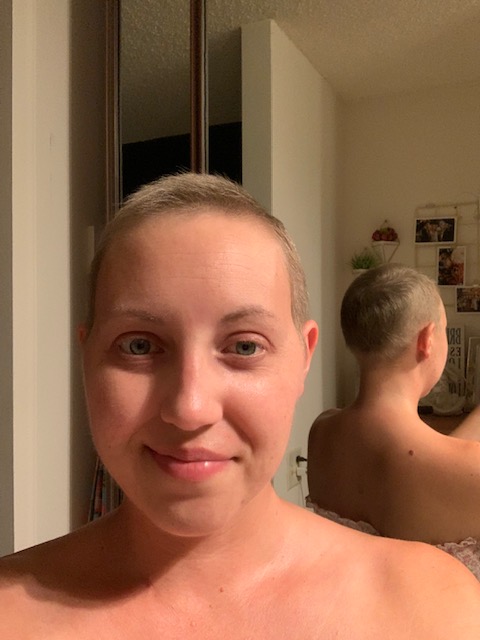
My hair and eyebrows are growing in nicely! In fact, I can almost make a baby mohawk. For 3 weeks post-chemo, I’m pretty excited about that! With my eyelashes growing in, my eyes have become super irritated, but I will be SO thankful to have lashes again! I miss mascara!

If you have any questions for me about surgery, lymphedema risk, or anything related to breast cancer or physical therapy – leave a comment for me below!

Hop you all have a great weekend! My mom will be here in two days! How lucky am I?!

Aloha ❤

Hopeful Updates and a Quick PSA!

Hopeful Updates and a Quick PSA!

Well, about 10 days have passed since my last chemo (still celebrating!), and I thought I’d update everyone on the emotional roller coaster that was the last week. It’s been surprisingly eventful!

I took the past week off to get a few appointments and scans done. I forgot to update on this, but on my last day of chemo last week, my manager at work notified me that we’ll be closing our COVID negative results call center at the end of this week (Nov. 7). It’s not lost on me how lucky I was to be able to have work through this pandemic, especially a safe job that I was able to do from home. I don’t think it’s a coincidence that chemo and that job will be ending at the same time. Time to start thinking about going back to some patient care (eventually)!

On Wednesday, I repeated my mammogram and ultrasound. Mammo was quick & easy but the tech was running behind so didn’t say much about anything she might’ve seen on the images. I’m able to see the ultrasound, however, and it was clear that there continues to be a small mass (6mm – about 1/3 the size of my original tumor) still remaining in my left breast. The poor ultrasound tech probably felt weird with me reading over her shoulder because she called in the radiologist who reminded me that the MRI would give more information. Because the MRI is done with contrast dye, any cancer cells will light up on the image. If no “lights,” then the mass may just be scar tissue.

Thursday morning, I had my MRI, and then in the afternoon I went in to my oncologist’s office for (hopefully) my last Zoladex injection (#SaveTheOvaries). I ran into my oncology APRN there and he printed the impression from my mammo & ultrasound for me and just casually mentioned, “The MRI showed nothing.” I won’t really believe it until I see the words on paper, and don’t worry I’ve been obsessively opening MyChart to see if the results are online. Not yet. Still, not yet. But I’m currently taking his word for it just so I can sleep at night.

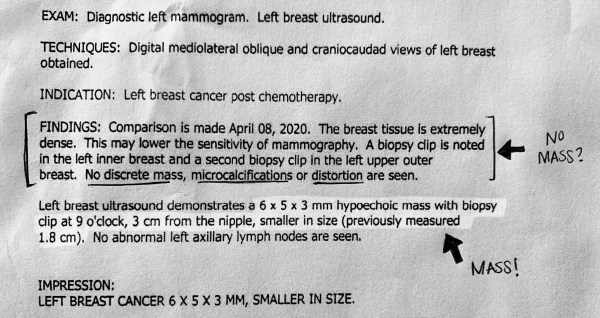
Quick PSA: If you have “dense” or “very dense” breasts, a mammogram can be less accurate at detecting tumors or calcifications in the breast. You should talk with your doctor about what other imaging can be done to be sure nothing is ever missed!
I’m going to post pictures below of my mammogram and ultrasound impressions to give you an example.

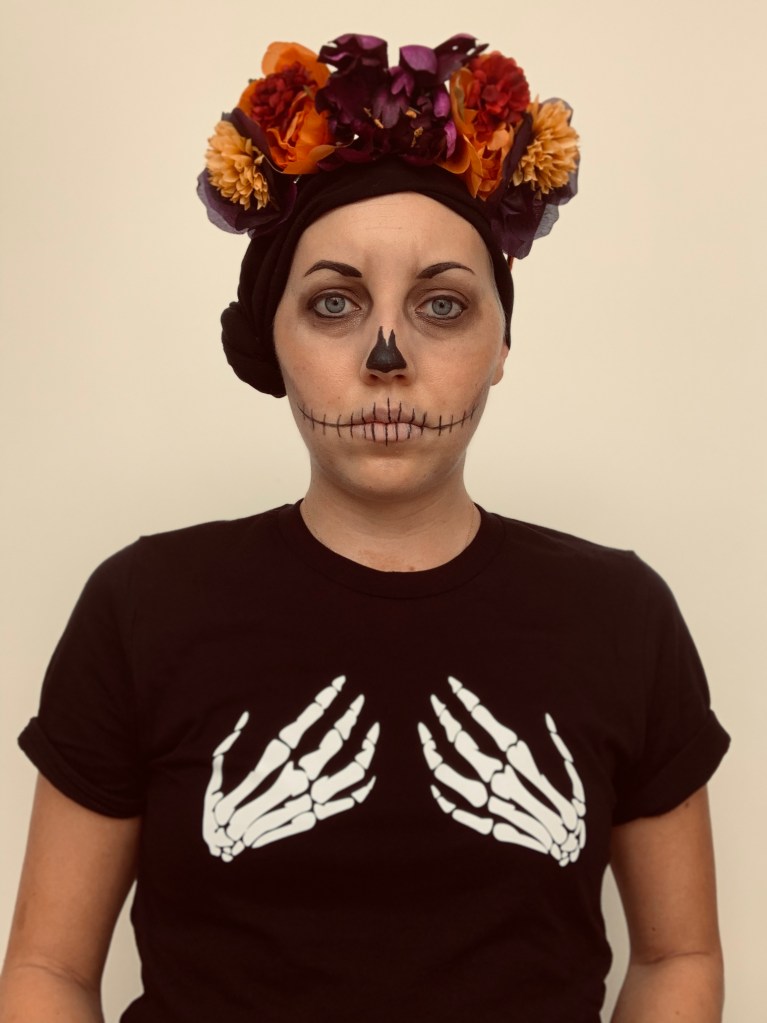
Otherwise, yesterday was Halloween, and I couldn’t miss a chance to dress up again! (Last year we landed in Japan at midnight on Halloween, and I wasn’t packing a costume with me.) Last night, Justin & I were able to get together for a socially distant dinner with his sister and her boyfriend which was so fun and I’m looking forward to getting to see more friends and family now that I won’t be so immunocompromised. We also got to make a quick pit stop at our friends’ place to see their new baby so all is right in the world ❤

And, as today is November 1, we are celebrating el Dia de los Muertos and reminding you to #FeelItOnTheFirst!! The first of the month is the perfect time for you do your monthly breast/chest self-exam!

Check yoself!

Due to COVID, breast cancer diagnoses are down by 51.8% — NOT because less people are getting cancer, but because they aren’t going in for their appointments! DO NOT DELAY your mammograms and OB/GYN appointments – your doctors and clinics are doing everything they can to keep you safe during this time. It could save your life!
*Remember: Men can get breast cancer, too, so encourage the men in your life to do their screenings!

With Breast Cancer Awareness Month coming to a close, please remember that breast cancer research does not stop needing support at the end of October and cancer survivors do no stop needing support once they’re “cured.” The fear of recurrence and survivorship in general evoke just as many emotions as the diagnosis and treatment. Treat everyone with a little grace and consider donating to cancer research if you have the means. I outlined some great breast cancer organizations in my previous post.

In case you’re following my Instagram page (@bri.d.pt), my sister-in-law Marisa & I had a great conversation about the inevitable thoughts of death/dying after receiving a cancer diagnosis or terminal illness. Check it out! If you’re interested in an intuitive angel card reading with Marisa, you can book one here!

I hope you all have a great week! Please stay healthy and safe, wear your masks, and wash your hands! Going into the holiday season, we want to be able to spend time with family and friends so the safer, the better!

Aloha ❤

Transgender Health & Breast Cancer

Transgender Health & Breast Cancer

As research builds for our transgender community, cancer screenings and preventative health must be encouraged. As hormonal therapy and surgery are often part of transitioning, trans people should be aware of their risk of developing certain cancers including breast cancer, reproductive cancers, or prostate cancer dependent on their individual treatment.

Risk of Breast Cancer in Trans Women

According to a Dutch study from 2019, for a trans female on hormonal therapy, the risk of developing breast cancer is slightly higher than in the cisgender male population, but still lower than the general cisgender female population.1 Just as hormonal replacement therapy has been shown to increase breast cancer risk in a post-menopausal cisgender female population, so it is for trans women.

Another Dutch study from 2013 noted that 60% of trans women whose records were reviewed in the study had dense or very dense breasts which is known to limit effectiveness of mammogram studies and puts someone at increased individual risk for breast cancer in all populations.2

Those with BRCA1/BRCA2 genetic mutations likely also have an increased risk of breast cancer, although more research is needed specifically for the transgender population. If someone has a BRCA mutation or significant family history of breast cancer, they should discuss screening options with their healthcare providers.

Risk of Breast Cancer in Trans Men

For trans men on hormonal therapy, the risk of developing breast cancer is lower than in the cisgender female population. Trans men also may choose to have top surgery which could include a breast reduction or removal of the breasts (bilateral mastectomy). The risk of developing breast cancer after mastectomy in this population is unknown at this time.1,3

Breast Cancer Screenings for the Trans Population

In the United States, some studies show that transgender people are less adherent to mammogram screening guidelines than cisgender people (often due to stigma or limited access to healthcare).4 However, it is important for these screenings to take place regularly as early detection of breast cancer can save lives.

Current guidelines for trans women who are age 50 or older and have been on hormonal therapy >5 years, a mammogram is recommended every 2 years.1

Trans men who have not had bilateral mastectomy or who only had a breast reduction should undergo an annual mammogram after age 40. After age 50, mammograms can be done every 2 years (but can be continued annually dependent on patient risk and preference). For trans men who have had bilateral mastectomy, chest wall examinations are recommended.3

Breast/Chest self-exams are recommended monthly for both transgender and cisgender populations to pick up early signs of cancer! To learn more about how to do a self-exam, see my previous post here.

Aloha ❤

Frozen Shoulder & Capsulitis after Breast Cancer Surgery

Frozen Shoulder & Capsulitis after Breast Cancer Surgery

Staying on topic with complications after breast cancer surgery. The two I’ll discuss today are common and can be disruptive to daily life. You’ve probably heard of frozen shoulder (adhesive capsulitis), but you may not have heard about breast capsulitis after breast reconstruction. Let’s dive in a little deeper.

What is capsulitis?

Capsulitis is inflammation of a joint capsule or the capsule around a breast implant that can lead to scar tissue adhesions and stiffening or immobilization of the joint or breast capsule. Uncomfortable – yes. Functionally limiting? Also, yes.

Frozen shoulder

While frozen shoulder (adhesive capsulitis) can occur after any shoulder injury, it can occasionally occur without any injury, and is more common in females and in people with diabetes mellitus or hypothyroidism. Frozen shoulder typically presents as a significant loss of motion in the shoulder with or without pain. To read a bit more about frozen shoulder, click here.

After breast cancer surgery, frozen shoulder is also common. For women aged 50-59, women who had mastectomy, or women who had breast reconstruction, the risk of developing frozen shoulder on the affected side is approximately 10%.1

Functionally, frozen shoulder leads to difficulty getting dressed, showering, combing your hair, lifting and carrying objects, driving, sleeping, and a whole lot of things we do on a daily basis.

Physical therapists treat frozen shoulder using manual therapy like joint mobilizations, teaching passive stretches and gradually strengthening around the joint as motion improves, and educating patients on healing timeline and ways to modify daily activities to improve use of the arm and reduce pain.

Rehab for frozen shoulder can sometimes take close to a year before a person feels “back to normal.” If caught early enough (i.e. during the “freezing phase” when motion loss begins to occur), a steroid injection can help to minimize the symptoms and restrictions. See your doctor right away if you notice a major loss in joint motion after breast cancer surgery.

Post-reconstruction capsulitis

Post-reconstruction capsulitis or capsular contracture can occur when fibrotic changes occur in the tissue capsule that forms around new breast impants. The breast around the new implant hardens, can become painful, and the breast shape can become distorted. To read a bit more about capsular contracture, click here.

Risk for developing capsular contracture is higher after radiation therapy or following infection, hematoma, or seroma that develops around a new implant. It is not clear whether smooth versus textured implants play a role in development of capsulitis.

Typically, if capsulitis occurs and is painful, distorts the breast shape or an underlying infection is present, revision surgery is needed. In Australia, approximately 39% of revision surgeries each year are due to capsular contracture.2 With early stage contracture, a physical therapist can use manual therapy to try to restore motion and prevent further fibrosis of the breast. A PT will also be sure to address shoulder, neck, and chest wall motion which could be compromised with post-implant capsulitis.

For both frozen shoulder and post-reconstruction capsulitis, getting into see a physical therapist early is important to prevent loss of motion and to reduce pain. Ideally, PT’s would love to see breast cancer patients within 4-6 weeks after breast surgery or reconstruction. Developing a relationship with a physical therapist during and after breast cancer can be a great asset to your health and wellness beyond cancer. Ask your surgeon for a referral or find a PT in your area here.

Aloha ❤