Warning Signs of Cancer

Warning Signs of Cancer

It’s September 1, everyone! Time to do your preventative screening!
I encourage you all to perform your breast self-exam or schedule your annual mammogram, pap smear, skin check, colonoscopy, PSA test, or whatever it is you’ve been meaning to do!

Early in my cancer diagnosis, I would often be asked “How did you know to go to the doctor?” or “Did you have any other symptoms besides finding a lump?” Because early detection is of utmost importance with a cancer diagnosis, I wanted to point out a few of the warning signs I recognized as well as a few others that might warrant getting things checked out by your physician.

In December 2019, I had my annual OB/GYN appointment with a new doctor. She did a thorough breast exam as part of the usual routine and all of my test results came back normal otherwise. At that time, there was no palpable lump in my left breast.

In early February, I took a quick weekend trip to Seattle to see my bestie. I had worn a mask on the plane because the first whisperings of COVID were happening, but on my first night there I still had some mild flu-like symptoms. I took my temperature and had a low-grade fever. The fever broke by the next morning, but the rest of the day I had an annoying nausea – enough that it convinced me to buy a pregnancy test! Turns out, I wasn’t pregnant, thankfully!

Over the next several weeks, I would leave work and continue to have these feverish symptoms, but they would come and go. At one point, there had been a small rash over the area of my unknown tumor but that disappeared, too. It wasn’t until mid March that I felt the lump. To be honest, I was not a regimented self-checker, but I couldn’t miss it, and I didn’t wait long before making an appointment with my OB/GYN to get it checked out.

I want to emphasize here that when I got into my OB/GYN (who squeezed me in her usually packed schedule), she sent me for imaging and biopsy immediately. Not every woman under 40 with breast cancer has been this lucky, and many are told “you’re too young to have cancer” or “let’s just watch it.” I can’t stress enough that if you feel like something’s not right, you must be your own advocate. YOU have to be responsible for your own health. Get 10 other opinions if you have to, but find a provider who listens to you!

So, yes, looking back there were other signs that should have alerted me even sooner, but it was actually the cumulative symptoms (& my own intuition) that made me seek an appointment so quickly.

Here are a few cancer red flags you should be aware of:

Systemic Changes:

  • Unexplained weight loss (>10 pounds in a short period of time)
  • Extreme fatigue that doesn’t improve with rest
  • Fever (especially if worsens at night) or night sweats with no other sign of infection
  • Pain that does not resolve with repositioning or medications, ALSO pain that wakes you up at night

Localized changes:

  • Skin changes (check out the ABCDE method to monitor your skin)
  • Lumps, bumps, or thickening of the skin
  • Unusual bleeding or slow-healing wounds
  • Changes in bowel or bladder habits (slowed urine flow, blood in urine/stool, etc.)
  • Difficulty swallowing or persistent indigestion
  • Persistent cough or hoarseness

I’m not posting these warning signs to create panic, but to bring awareness. Many of the signs and symptoms listed above relate to other, more benign conditions too, so don’t freak out! I truly believe that the more we know our bodies, the sooner we’ll be able to recognize when something’s off.

Hope you’re all having a great week & taking care of yourselves!

Aloha,
B
Round 8

Round 8

Today is an exciting day! I have officially completed HALF of my chemo, and I’m celebrating every little victory as you know! Eight more treatments to go sounds a bit daunting, but I think I’m figuring out the taxol and have most of my side effects well-managed so hopefully I can breeze through it.

While I sat in my infusion today (a little loopy from my benadryl drip), I couldn’t help remembering my friend Dana crossing the finish line at her first 100-MILE ULTRA MARATHON in January. Really? What a badass! She told us that at her half way point they started singing “Living on a Prayer” which is appropriate for today too, but now that song is stuck in my head…

A true 80’s masterpiece….

The human body is capable of truly amazing things, and so I look to Dana for inspiration that my body can heal itself just as she pushed hers to those extreme limits.

In more good news, my oncologist is recommending only one Zarxio injection to boost my white blood cells this week since my counts have been a bit more stable. Wish me luck that it stays that way!

Hawaii just began another 2-week shelter-in-place order so… if you need me, I’ll be at home! Truthfully, this is a bad sign because it means our hospitals are full and will not be able to care for all of our state’s critical patients if the trend in COVID cases continues. Please say some extra prayers that quarantine brings our numbers down significantly and that our frontline healthcare providers (including my wonderful coworkers) stay safe & healthy!

I have a few educational posts lined up for the future, but I wanted to know what you all would like to learn about most this week:

Sending you all love this weekend! Stay healthy and practice gratitude ❤

Aloha,
B

Round 7

Round 7

Hi, everyone! I took a little break from blogging last week because nothing too eventful happened honestly!

I finished my 3rd taxol (7th treatment overall) today – this means I’m 1/4 of the way through the taxol treatments (gotta celebrate every little victory)! After next week, I’ll be half way done with chemo ❤ So far this one is a piece of cake compared to the AC “red devil,” and I’m grateful for that.

I give attention, appreciation, and acceptance to everyone.

Deepak chopra

I have had some difficulty keeping my blood work normal. This isn’t uncommon, but I’m really competitive so I want everything in the normal range. My white blood cell counts came back low the past 2 weeks and my doctor lowered my chemo dose last week but decided to try that same dose again this week. With low white counts, I’m at a very high risk for infection, so I honestly haven’t left the house or interracted with anyone besides my husband and doctors in the past 2 weeks. Justin agreed to work from home for a few weeks until our spike in COVID cases improves to keep both of us and his immunocompromised patients healthy.

In order to boost my white count they gave me a series of 2 injections of Zarxio last week and I’ll also have 2 more tomorrow and Saturday. Zarxio is similar to the Neulasta/Udenyca injection I had after AC but is a “short release” versus “delayed release” action. We’ll see how it goes – if my counts don’t come up high enough, we may have to lower the chemo dosage again. These injections were a killer last week and gave me body aches, tailbone pain, and hot flashes – maybe I missed that with the Udenyca because I was so sick otherwise!

My red blood cell counts and hemoglobin/hematocrit are also low which puts me at risk for anemia. It’s not terrible, but I’d rather it not drop any lower. I’m keeping up with exercise and an iron-rich diet in hopes to keep it up as much as I can.

I’ve also seen my liver enzymes rising which my oncologist contributes to the chemo itself and not to any other medications or supplements I’m currently taking. My acupuncturist recommended a milk thistle supplement to help the liver clear those drugs out of my system, so I’ll give it a try. There is very little research to say it’s helpful, but a lot that says it doesn’t cause any harm, so why not? I’m also going to acupuncture weekly and this has been a lifesaver as she focuses heavily on my liver and kidneys as well as preventing any peripheral neuropathy.

Anyway, that’s all that’s new here. I’ve been working, watching a lot of Netflix, and took an excellent business training based on Human Design this week. If you haven’t heard of human design, I highly recommend you look into it! Check out my friend www.krystalewoods.com/humandesign (or @krystalewoods on instagram) to learn more!

I’ve been using guided meditations from Deepak Chopra the past several weeks and the quote above really caught my attention. I hope it can be a centering thought for you this week as it has been for me. Take note of all the beautiful people and things in your life and give them your attention, appreciation and acceptance. No one is perfect, but we all do our best.

Hope you all have a great weekend – stay safe and healthy! Sending you all lots of love.

xo

Paying it Forward: Participation in Clinical Trials

Paying it Forward: Participation in Clinical Trials

In my last post, I described the side effects of taxane-based chemotherapy (aka taxol, paclitaxel, taxotere, or abraxane). We know that chemo-induced peripheral neuropathy (CIPN) is a large concern while undergoing these treatments. For me, as a physical therapist who uses my hands to guide my treatment, I jumped at the chance to participate in a clinical trial related to better understanding who is most likely to develop CIPN during chemo.

The study I’ll participate in is run by the University of Hawaii John A. Burns School of Medicine. It entails having several measures taken prior to taxane-based treatment (baseline), at 4-week intervals during treatment, and then several measures taken at various intervals up to 3 years post-treatment. The goal is to look at trends in which patients develop CIPN, how long CIPN lasts if developed, and if certain supplements or adjunct treatments (like acupuncture) help to prevent CIPN. In this way, doctors will be able to help patients make informed decisions to prevent this nasty side effect in the future.

Measurements taken include monofilament testing to measure protective sensation at various points on the feet, tuning fork assessment at bony points on the hands and forearm to measure vibratory sensation, a basic balance test call the Timed Up and Go which measures gait speed and safety, and several questionnaires which ask about loss of sensation, pain, sleep quality, physical activity, and general quality of life.

Even before I had officially met with my oncologist, I was hoping there would be a clinical trial that I could participate in. I feel that it’s a great way to pay it forward to others who will undergo similar treatments in the future. If they can have one less thing to worry about while navigating a super difficult time in life, then why not?

Clinical trials are very important, especially in the case of triple negative breast cancer. If enough evidence for specific treatments can be gathered, it could change the course of treatment for other patients in the future. As not much is actually known about TNBC since the tumors lack hormone or HER2 protein receptors, the exact same chemo regimen has been used to treat it for years! Thank goodness chemo is super effective! Here’s hoping new advances will be made to make treatment a little easier on everyone in the future.

If you’ve been diagnosed with cancer and you’re interested in participating in a clinical trial, ask your doctor if you qualify for any in your area. You can also go to clinicaltrials.gov and look up studies for your specific diagnosis and take ones that interest you with you to your next appointment to see if you do qualify.

There are many types of studies including observational studies (like the one I’m participating in) as well as randomized-controlled trials that may be testing new treatment options or options that make current treatments more effective. Remember, participation in a clinical trial is completely optional and if you start out with one, you can always opt out at any time. You don’t have to feel like a guinea pig if you don’t want to!

Feel free to reach out with any questions about joining or participating in a clinical trial!

xo

Round 5

Round 5

We’ve hit another landmark in the active treatment phase! I say we because I absolutely could NOT do this without the support of all of you so thank you! I started a new chemotherapy regimen yesterday which is a cocktail of paclitaxel and carboplatin (TC).

TC is a weekly regimen that will last 12 weeks. Thankfully, these treatments are not “dose dense” like the adriamycin/cytoxan treatments that I just finished and everyone keeps telling me it shouldn’t be “so bad.” Judging by my current reaction to yesterday’s treatment I’d say they’re right. I honestly felt like I tolerated the AC treatments extremely well, but I feel really great today so I’m hoping it continues this way over the next few months.

“It always seems impossible until it is done.”

– Nelson Mandela

Of course, I know these treatments are cumulative so I do imagine side effects will build up as I undergo more treatment, but as usual, I’ll continue to stay as healthy as possible otherwise and pray that my body handles the rest. I feel very strongly that radically changing my diet and continuing to exercise has made ALL the difference.

Speaking of side effects – TC still compromises the immune system, but to a lesser effect than AC did (good news since Hawaii is currently seeing a major spike in COVID cases – ok, I guess I’ll admit my doctor was right to start me with AC when she did even though I was NOT happy about that at the time). TC is also less likely to cause extreme nausea/vomiting, GI upset, or mouth sores, although all are technically possible.

Unfortunately, the combo of TC is much more likely to cause symptoms of chemo-induced peripheral neuropathy (CIPN). CIPN can show up as:

  • Damage to sensory nerves which creates numbness/tingling, burning/shooting pain, or cramping in the hands and feet which can make it difficult to balance or to perform fine motor skills like buttoning buttons or writing. It also can cause sleep disturbances as pain is typically worse in the evenings/at night.
  • Damage to cranial nerves which are nerves that leave the brain in the skull and control our sensations like vision, hearing, smell and taste as well as some of the muscle control of our face and neck.
    • If the vestibulocochlear nerve is affected, a person may have hearing loss but, maybe more importantly, if the vestibular portion of that nerve is affected, a person may experience “vertigo” symptoms like dizziness or imbalance which can increase risk of falling.
    • Another cranial nerve that is commonly affected is the hypoglossal nerve which controls the movements of our tongue. This can lead to difficulty eating and swallowing.

As a physical therapist, these things obviously concern me, especially to have sensory changes in my hands, because I rely on my sensation heavily to treat my patients. There are a few pieces of good news, though – it can be prevented by taking certain supplements (I’m taking a vitamin B complex, glutamine, vitamin D, and fish oils per my oncologist’s ok), icing my hands and feet during my taxol infusion (NOT fun! I may have cried while talking to my dad on the phone because it was so painful while I was waiting for the numb to kick in – sorry, Dad!), and doing acupuncture. The other piece of good news is that if I do happen to develop these symptoms, they are not always permanent and often improve within the first 6 months after treatment is over.

It still feels good to have AC behind me so I’m in pretty good spirits and feel like there’s a light at the end of the tunnel for chemo at least. In regular life, I dropped off our ballots today – make sure you get out and vote in your primaries if you haven’t already! I’m still working on my Pilates teacher training – if you haven’t joined in for free Wednesday night Zoom Pilates, please join us! Send me an email here for the Zoom info!

Hope you all are doing well and staying safe & healthy in pandemic time! Sending lots of love & light your way ❤

xo

Finding Support during Cancer Treatment

Finding Support during Cancer Treatment

Hi everyone! Just wanted to give a little update on how the past few weeks have been. I am on a two-week break from chemo after completing my AC treatments, and honestly, I really needed the extra time before starting the next thing. The 4th round of AC hit me pretty hard on top of what was an already very emotional week so I was kind of a mess!

Fortunately, my body’s recovered a bit more now, and I’ve been able to get back to doing some walking and Pilates. Earlier in the week, I had been having a few days where my heart was racing (even lying down) and I was retaining some fluid in my abdomen and feet. According to my oncology APRN, this is relatively common during chemo, and he gave me a new medication to help offload some of the fluids. This helped my body (& mind) significantly. One of the major concerns with the adriamycin/cytoxan regimen is cardiotoxicity (heart failure) and I’ve learned that I have a lot of fear around that (understandably)!

Waikiki staycation time! Read on for details…

In fact, I’m learning new things about myself daily. Fears, strengths, priorities…cancer is the best self-help bootcamp anyone never asked for. I’ve been working with a psychologist to help with coping mechanisms and anxiety around all of it, and I continue to work on mindfulness practices as often as I can.

Normally, there would be local support groups I could attend to buddy up with other women in the community going through the same thing, but unfortunately those have been put on hold due to COVID as well. I have found a few helpful Facebook Groups, though, which I’ll link below for fellow warriors needing a resource.

I’m thankful to family members & friends, former patients, and new Instagram friends who are survivors and thrivers that have shared their stories with me and who keep checking in on me too! It’s SO important for anyone going through cancer to find your “team” who lifts you up and kicks your butt into gear on your cancer journey. If you’re reading this, and you need help finding your people – reach out to me!

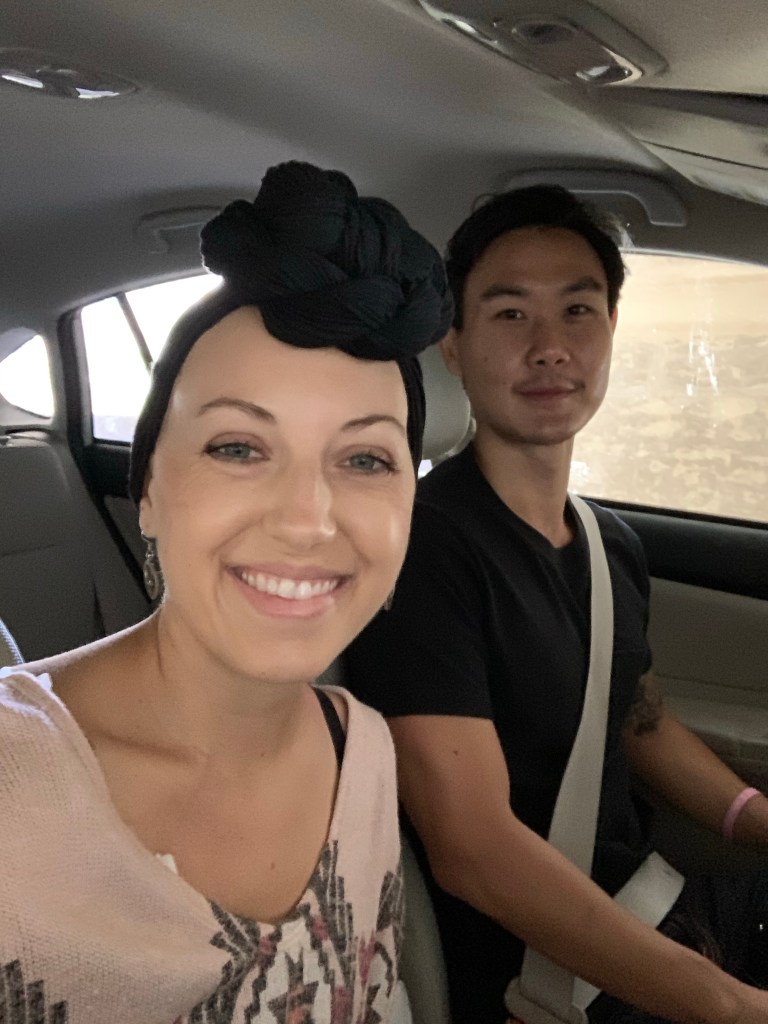
I really have to give a shameless shout-out to my husband who has risen to the challenge of being the best caretaker, chef, chauffer, calmer-downer….ok I can’t think of any more words that start with C… (I really tried)! But seriously, he is amazing and he doesn’t have to do as much as he does for me, even when I can tell it’s taken a toll on him, too.

We were able to take a little staycation in Waikiki this past weekend with the only goal to rest and put our responsibilities aside for a few days. We walked, laid by the pool (with sunscreen, of course!), and ate really good takeout so I think we both feel recharged and ready to take on the next big thing!

View from our room!

I’ll start paclitaxel/carboplatin on Thursday and as far as I hear, the side effects are usually significantly less than AC so I’m hopeful. Later this week, I’ll update you all on a clinical trial that I’ll be part of during this regimen, too!

Take care of yourself!

xo

Resources for support during cancer:

Nancy’s List: Nancy is a cancer survivor who has put together an amazing list of practitioners and centers nationwide to support cancer warriors with anything from financial support, psychological services, reiki, exercise classes, and other integrative therapies.

Facebook Groups: There are a broad array of Facebook groups now so you may have to search for those that are most applicable to your diagnosis, age, etc…
I have found the most support and guidance in these two groups:
1) Triple Negative Breast Cancer Foundation
2) Young Women with Breast Cancer
There are even groups for people with BRCA+ cancers, for those who are pregnant and going through treatment, and for those starting families after beating cancer! Find groups that resonate with your “vibe” and spend time looking for groups that are more specific to your diagnosis so you can get the most out of it!
*PRO TIP: Advice given in these groups is not intended to be used as medical advice, BUT sometimes people will post about new research or treatments that you can run by your doctor!

BC Healthline App: This free and awesome app (available for iPhone and Android) connects women nationwide with others who have similar breast cancer diagnoses or staging. There are frequent guided chats about hot topics like new diagnosis, treatment, lifestyle, and living with metastatic breast cancer. It’s an easy and informative way to connect virtually!

Round 4

Round 4

I had my final round of adriamycin/cytoxan last Thursday! It feels good to be able to celebrate not only surviving, but thriving, the past eight weeks. This also means I’m currently a quarter of the way through my chemotherapy as well! If all goes as planned, I’ll start my next phase of chemo – paclitaxel and carboplatin – on August 6 and will complete the 12 weekly treatments on October 22.

In excellent news, these first four treatments have been extremely effective. I can no longer feel my tumor and my oncologist said, “It feels like normal breast tissue.” Still no lumps in lymph node areas so I am so very grateful for all of your prayers and all of this medicine working its wonders. I will have to finish out the next 12 treatments, and then I’ll be able to do scans again to see exactly where I’m at post-chemotherapy.

This time around I’m taking my time to recover a bit more than I usually do. My motivation is a little low with losing our sweet Grandma this past week, and the fact that Hurricane Douglas is coming our way doesn’t exactly make me want to go for a walk outside. Hellooooo….2020? I think we’ve all had enough now!

Overall, I’m doing ok. I took an excellent course about oncology rehab last weekend and I’ll share some of that with you here soon, but today, I’m going to keep watching The Good Place and HGTV. Love y’all & stay safe my Hawaii friends!

xo

Lymphatic Drainage Techniques for Detox

Lymphatic Drainage Techniques for Detox

As you all know, chemotherapy involves a lot of heavy pharmacology. These medications are absolutely life-saving, but they can also take a toll on our body’s natural detoxification processes and can leave anyone feeling sluggish, tired, or generally unwell. This post is for anyone going through chemo, but also for anyone who lives on planet Earth right now. We are exposed to so many chemicals daily and we need to keep our bodies healthy!

Our body’s immune system includes the liver, spleen, thymus gland, bone marrow, and all of the lymphatic nodes and vessels.1 Its primary function is to DETOX our body and protect it against infection and disease. The lymph is the circulating component and thus a very important player in ridding our body of waste products.

An important thing to know about lymph is that it needs some help to flow. Unlike blood vessels, lymphatic vessels do not have smooth muscle that helps to pump it throughout the body, so lymph relies on things like muscle contractions, gravity, etc. to promote a 1-way flow through our bodies.

Read here or watch the video at the end of this post to learn about my favorite ways to perform lymphatic drainage at home:

Diaphragmatic Breathing

Diaphragmatic breathing, or belly breathing, helps to gently stimulate the cisterna chyli. The cisterna chyli is a large lymphatic collecting vessel in the abdomen where lymph from all 4 limbs begins to collect. Stimulating lymphatic flow here can help promote circulation of toxins OUT of the body. Since it’s close to the heart, I like to clear this region first so nothing gets “backed up” if the flow is a little sluggish through here.

Manual Lymphatic Drainage

Manual lymphatic drainage is a gentle, stroking type of massage that helps promote lymphatic flow. There are many ways to do this – with gentle massaging strokes as described in the video below or by using a dry brush or jade roller. The key is to keep the pressure light – lymphatic vessels run close to the surface of our skin so it doesn’t take much to get it going!

Bowel Massage

I finally get to talk about poop (a pelvic PT’s dream)! The liver relies heavily on regular bowel movements to clear out waste and toxins from our bodies. If you are constipated, your liver is working overtime. Typically, we should have a bowel movement every 1-3 days. Before resorting to laxatives or stool softeners if you’re backed up, be sure you are getting enough fiber in your diet and try bowel massage to get that stuff moving! Check out my recommendations for bowel massage in the video.

Acupressure / Acupuncture

During this last round of chemo, I found myself going back to a few key acupressure points that my acupuncturist recommended to assist with lymphatic drainage. I’ve been working two points primarily – one near my right elbow and one on my left shin. Also, check out the P6 point on the wrist, which helps significantly with nausea (even for pregnant women and those who get motion sickness).

Exercise

Finally, my favorite way to get that lymph flowing – exercise! I recommend aerobic exercise, specifically, to increase circulation. It should be low intensity (you can still have a conversation while doing it) over a longer duration (20-30 minutes at a time), and you can pick your favorite activity like walking, biking, or swimming.

I hope this video helps you learn a a bit more about how to implement lymphatic drainage into your everyday life! Feel free to reach out to me with any questions you may have!

xo

Round 3

Round 3

On Thursday, I completed my third of four AC treatments, and it feels soooo good to know I only have to do one more round! Despite the spike in COVID cases on Oahu (& everywhere), Justin is still allowed to come to my appointments with me and I’m very grateful that he can.

Before I went into this round, I made up my mind that it was going to be easier than the past two. I wanted less nausea, less fatigue, and better appetite. Guess what, everyone – I got it. The mind is so powerful, and manifesting your goals and desires is an amazing tool no matter what you are going through.

My last AC treatment will be in two weeks, and then I’ll get two weeks before starting taxol treatments, which will be weekly, on August 6. While everyone says taxol is the easier one, I’m really not looking forward to weekly treatments, and I’m praying that it really is “a piece of cake” like my oncology APRN said.

Otherwise, there is not much else new. We are still social distancing quite a bit as COVID still lingers around. My immune system in the first week or so after chemo is really crappy, so it’s just better to be safe than sorry. My mom was hoping to come down to Hawaii the first week of August, but it’s looking like that may get pushed back a bit due to tourism restrictions.

That hospital parking garage lighting, though…

I still get to work from home a few days of the week, and next weekend I get to take an online continuing education course for oncology rehab that I’ve been wanting to take for months now!

I’d love to start up a more comprehensive oncology rehab program for our cancer patients at the hospital where I work. This is something that one of our inpatient therapists has been very passionate about and got me on board with as well. Hopefully, in the next year, we’ll have a good system to get more oncology patients in for baseline testing and guidance before, during, and after their treatments. I know that exercise has been one of the most important things for me during chemo, and I hope to help others understand the importance as well.

I hope you all have a really great weekend!
Just a little P.S.A. before I go…No matter what you hear on the news or Facebook, wearing masks is a VERY important step to reduce the contagion rate of COVID-19 (if it weren’t, none of your healthcare workers would bother with them, trust me). It’s true, the death rate from COVID is very low, but the high rate of contagion is the scary part. Please wear your masks to protect those around you – don’t be selfish. Mahalo!

Sending love to you all ❤

xo

Understanding your Lab Results During Chemo

Understanding your Lab Results During Chemo

During chemo, there are a few important labs that your provider will run frequently. These specific tests help them determine the best course of treatment for you and give you and your provider an idea of how your body responds to treatment, guide future treatments and help you understand your risk for infection, anemia, or liver/kidney damage as you go through treatment.

Knowledge is power.

Below, I’ll outline two common panels that your doctor may order to check on your general health. This is meant to be a rough reference guide so be sure to ask your doctor what it might mean for YOU specifically if something comes back outside of the reference range!

Complete Metabolic Profile1

A panel that relays important information about your body’s metabolism and chemical balance. Click on the number under additional info to read more!

TestNormal RangeAdditional Info
Glucose70-99 mg/dLYour blood sugar levels! Glucose is the body’s main source of energy so it’s important for this to be balanced. It can indicate diabetes if high.2
Blood Urea Nitrogen (BUN)
6-23 mg/dL

An indicator of your kidney’s ability to remove waste products from the blood.3
Creatinine0.7-1.4 mg/dLA waste product of muscle breakdown which happens with everyday activities. This test indicates kidney function as the kidneys typically clear creatinine from the blood/urine.4
Sodium5

Potassium6

Chloride7

Carbon Dioxide (CO2)8
133-145 mEq/L,
3.3-5.1 mEq/L,
95-108 mEq/L,
21-30 mEq/L
Substances, sometimes called electrolytes, which help balance your body’s fluid and acid/base regulation. These tests can indicate a variety of metabolic disturbances such as dehydration, irregular heart rhythms, or alkalosis.
Calcium8.3-10.5 mg/dLAn important mineral for regulation of nerve, muscle, and heart function! Not just good for your bones!9
Alkaline phosphatase (ALP)10,
Alanine transaminase (ALT)11,
Aspartate aminotransferase (AST)12
35-129 IU/L,
0-41 IU/L,
0-40 IU/L
A variety of liver enzymes which indicate liver function.
Bilirubin0-1.2 mg/dLA waste product from the liver that indicates liver function.13
Albumin3.5-5.2 g/dLA protein made in the liver that helps to carry out various bodily processes. Low levels may indicate liver or kidney dysfunction.14
Total protein6.4-8.3 g/dLA measure of the total protein in your blood.

Complete Blood Count15

An assessment of various cells which circulate in the blood which are good indicators of overall health and your risk for infection or disorders.

TestNormal Range Additional Info
Red Blood Cells (RBC)3.6-5.4 x 10⁶/uLRBCs carry oxygen from lungs to your body. Low RBCs could indicate anemia.
Hemoglobin (Hb)11.2-15.7g/dLA protein that binds oxygen to RBCs. Low Hb can indicate anemia.
Hematocrit (Hct)34.1-44.9%The percentage of your blood made up of RBCs. Low Hct can also be used to screen for anemia as well as for dehydration.
Platelets151-424 x 103/uLPlatelets help with clotting. If platelets are low, you could bruise or bleed more easily, and if platelets are high, you could be at higher risk for blood clots (deep vein thrombosis or pulmonary embolism).
White Blood Cells (WBC)3.8-10.8 x 10⁶/uLWBCs are immune cells which help to fight infection. Low WBC count could mean you are at higher risk for infections and you should take extra caution to stay healthy.16
Neutrophils34.0-72.0%,
(Absolute:
1.56-6.20 x 10³/uL)
WBCs formed in bone marrow which specifically target bacteria and fungi. They are the first line of defence against infection!
Lymphocytes12.0-44.0%
(Absolute: 1.18-3.74 x 10³/uL)
WBCs abundant in the lymphatic system that identify and destroy foreign invaders (like cancer cells!).
Monocytes0.0-12.0%WBCs that fight bacteria, viruses, and fungi, but which also play a role in tissue repair and healing.
Eosinophils0.0-7.0%WBCs that are involved in allergic inflammatory response and also target larger parasites (like worms).
Basophils0.0-2.0%WBC involved in allergic reactions.

Again, if your labs come back with any unusual values, be sure to discuss them with your physician so you fully understand the interpretation.

Here are some good questions to ask your doctor about your labs:

  • Why do you choose to run these specific lab tests?
  • What does it mean that my lab values came back high/low?
  • Are there any symptoms I should watch for that could indicate dehydration, anemia, blood clots, or infection?
  • What should I do if I think I am showing signs of infection (i.e. fever, chills, etc.)?
  • Is there a way I can see my lab values online? If not, can you print them for my records?
  • When should we run these tests again?

I hope this is a helpful reference guide for you as you begin to better understand your general health, but especially during chemotherapy. As always, feel free to leave any questions you may have in the comments!

xo