Pregnancy after Breast Cancer

Pregnancy after Breast Cancer

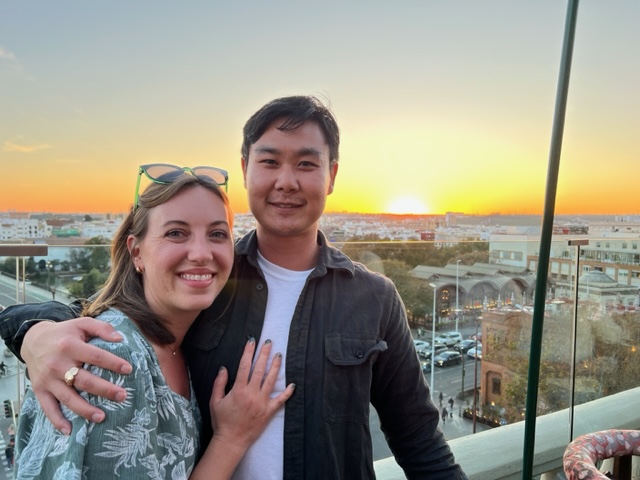
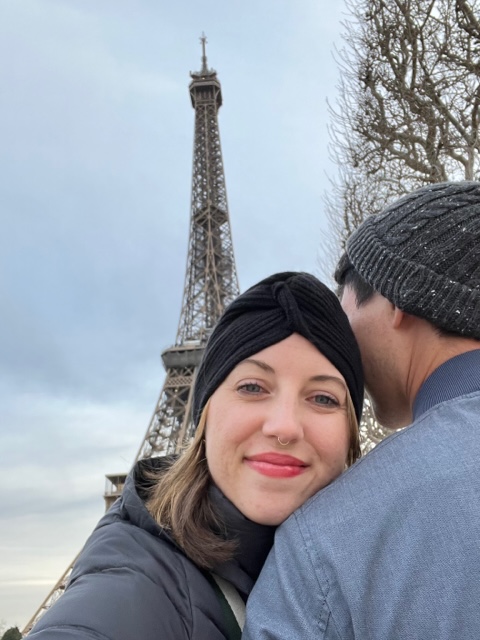
Hi – it’s been a minute and…SURPRISE! If you didn’t already know – I’m pregnant! My husband and I are so thrilled to be expecting our first child in December, especially because we weren’t sure what this ride would be like for us. It’s such a blessing to be here three years post-diagnosis sharing this news!

First pic of our little buddy! ❤

I wanted to take this opportunity to write about a few of the normal and not-so-normal experiences I’ve had during this post-cancer pregnancy, because there are a few things I’ve had to consider beyond what someone without my medical history might experience. I also want to acknowledge that every person’s experience with conception and pregnancy is so different, and with so many dealing with the heartbreak of infertility, I want to be as respectful as possible. What works for me, may not be helpful to your experience. I send my love to anyone on their family building journey, however that may look!

Conception Concerns

Conceiving naturally after breast cancer treatment was NOT a given. You’ve all read my saga of a fertility preservation journey through cancer… Thankfully, though, natural conception is not impossible! I remember speaking with my fertility specialist when we were starting the egg-freezing process prior to chemo and asking him what percentage of people do conceive naturally after treatment and then proceeded to blurt out “Well, you probably don’t get to see those patients return anyway!” when he told me it’s “not likely.”

From the moment I realized that infertilty after cancer was looming, I decided to change my mindset. I decided I’d do whatever I could to support my body during and beyond cancer treatments to give me the best chance of conceiving naturally (because, not sure if you’ve heard, but IVF is expensive!!!).

Here are some of the ways I have tried to support my body’s ability to conceive from early in my diagnosis:

  • Eating a well-balanced diet (& actually switching from a primarily plant-based diet to a paleo diet)
  • Acupuncture
  • Seed cycling for menstrual support
  • Supplementing with vitamins, minerals, and antioxidants with guidance from my naturopath
  • Tracking my cycle and understanding my norms
  • Managing stress with meditation, tapping, and time outside
  • Positive mindset and visualization
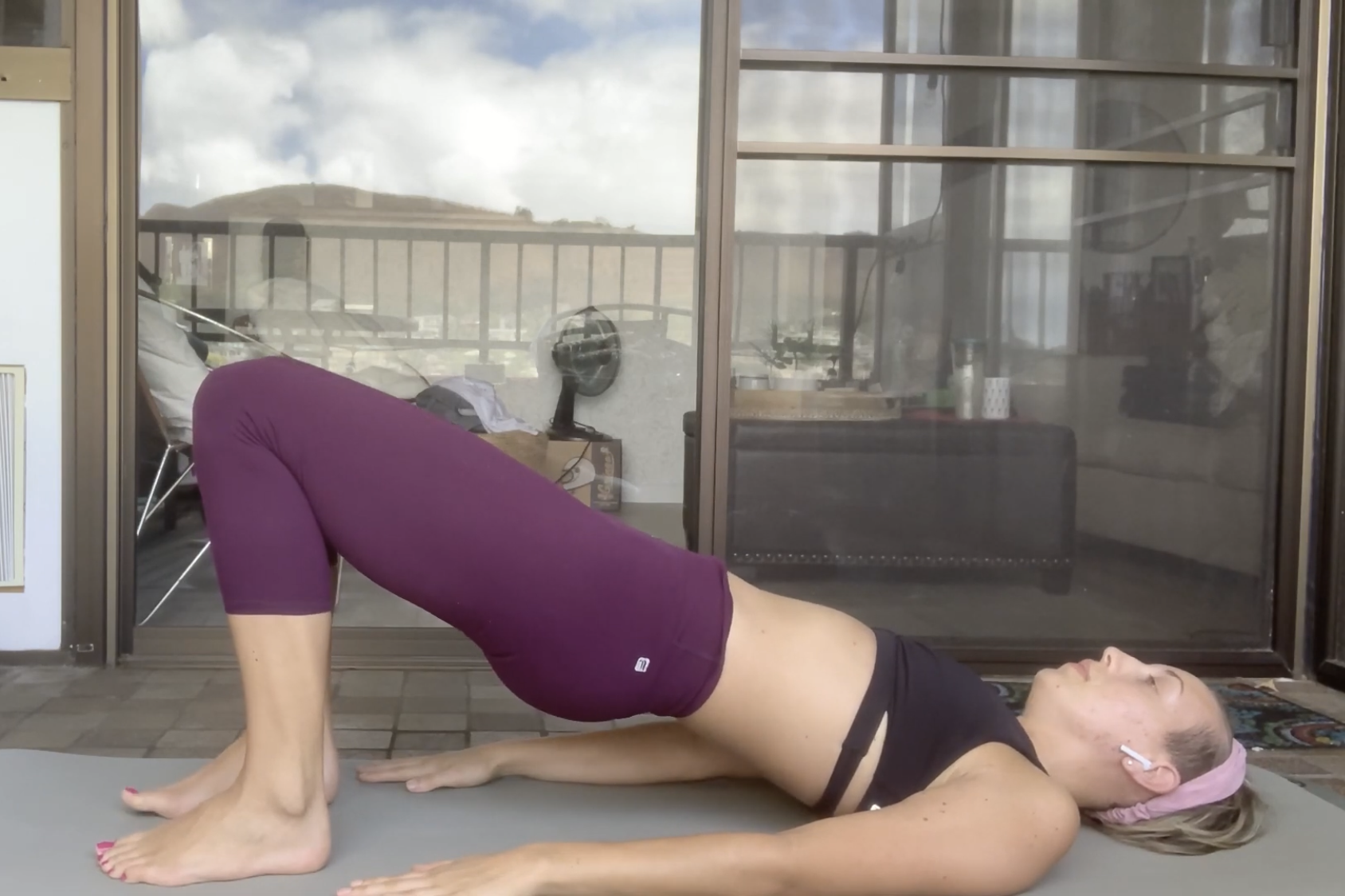
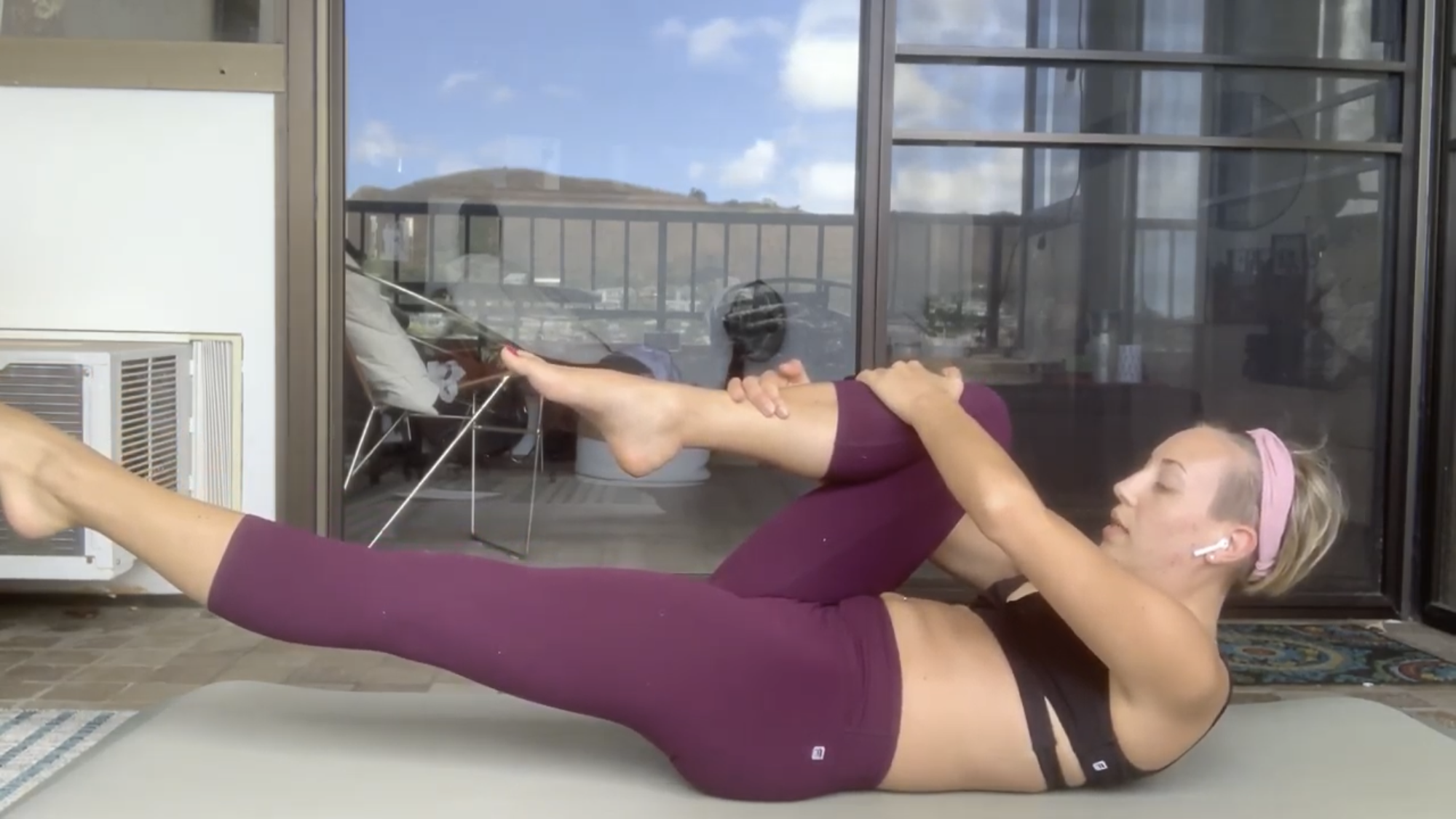
  • Exercise!
  • Medically – Zoladex to protect my ovaries during chemo & Egg-freezing (oocyte cryopreservation) as a “Plan B”

Here’s a cool story for you…

If I haven’t mentioned it here before, I am a HUGE fan of my Oura ring for tracking my cycles and other biohacking purposes. Even before I had missed my period, my ring indicated elevated basal body temperatures and resting heart rate so I knew even before I took my first pregnancy test that I was likely pregnant!

And so I was just lucky (?) that I was able to conceive naturally this time around, but I can honestly say that I did what I thought I needed to do to support that. It may not be feasible or even physically possible for some or may just be all too much for others, but I just wanted to share my personal experience here.

Cancer Screening Change-Up

Prior to pregnancy, I was having an annual mammogram and an annual MRI (staggered every six months) to monitor for any signs of recurrence. I’ve never monitored tumor markers because mine were never elevated, and therefore wouldn’t give an accurate snapshot of my health. With triple negative breast cancer, the risk of recurrence is absolutely highest in the first three years and begins to taper down signficantly after 5 years of being cancer free. I had just celebrated my 3-year diagnosis cancer-versary in April when we found out we were pregnant, so I am definitely not out of the woods and screening are still important.

First of all, for the rule followers…my oncologist did clear me to try for pregnancy, and she knew I was pregnant before I even told my family!

Second of all, I obviously don’t want to cause any harm to the baby by undergoing procedures with high levels of x-rays or heavy metals contrast. So, for screenings throughout pregnancy, I resort to clinical breast exams and should any concerns arise, an ultrasound is safe and the first step we’d take to check everything out.

I continue to do my monthly breast self-exams (don’t listen to what the American Cancer Society says, these continue to be important for everyone!). This has honestly been very difficult for me emotionally throughout pregnancy for several reasons. One, being that I found my lump myself so there is a bit of PTSD there… and, two, because TNBC is notorious for popping up in the pregnant/postpartum phase. With many changes happening in my body during pregnancy (normal), finding a lump is not my favorite thing to think about. I say this only to validate others who may be experiencing the same thing!

Lastly, last year I requested to start doing blood draws twice annually which can specifically detect my tumor’s unique DNA in my system. This test is run by Natera Genetics and is commonly used with more advanced stage disease to ensure treatments are working. It is generally not indicated for early stage survivors as there is no protocol for “next steps” should any elevation of circulating tumor cells be detected.

However, knowing that I was intending to get pregnant and screening options would be limited, my doctor magically got my insurance to cover this for me and my most recent test does NOT indicate any signs of recurrence – yay!

As scary as it can feel to pursue pregnancy and parenthood with a not-so-distant cancer diagnosis, there are options to continue screening throughout pregnancy. I find that mindset is so important, and I remind myself on a daily basis that my baby and I are healthy and thriving through this pregnancy and it keeps me present.

Non-Cancery Curve Balls

Honestly, I’ve been very lucky to have a relatively uneventful pregnancy thus far. I tell most people I did it backwards since I felt so well throughout my first trimester and have had a slow decline in energy and motivation after getting halfway through my second trimester.

I did find out early on that my Rh- blood type means I need a Rhogam shot so my body’s antibodies don’t attack the baby’s if their blood type is Rh+ so I’m heading to get that later today.

I learned the hard way that Paxlovid can be taken during pregnancy if you get COVID-19 with moderate to severe symptoms. However, from my brief research, the U.S. is currently the only country deeming it safe for pregnant women/fetuses so I opted not to take it. I primarily blame COVID (& not the tiny human growing inside) for my listlessness these days…

And, as it turns out, the 1-hour glucose screening test is made to be quite difficult to pass. Obviously, it would not be great to allow someone to go through pregnancy with undiagnosed gestational diabetes. So here I sit, waiting to complete my 3-hour glucose tolerance test. As inconvenient as these tests can be, it’s all for the health of mama and baby, and I’d rather make a few lifestyle changes to get us both safely to somewhere closer to our December due date!

Beyond all that, I’m just immensely grateful to be on this post-cancer, prenatal journey with my incredible hubs and family and friends who’ve been the ultimate support. As I start my third trimester, I am definitely in nesting mode and doing my best to connect to this little soul that I’ll get to bring earthside in a few short months!

I’ll be scaling back my work days at the end of the month, testing out for my official Pilates certifcation in the next few weeks, and prepping for a few upcoming education opportunities on the state and national levels!

My last reminder today is that while we all may have good intentions for Breast Cancer Awareness Month this October, please check who benefits from your dollars spent before you buy anything PINK! My favorite organizations to donate to that support breast cancer research or survivors themselves include:

Click on the links to donate! And don’t forget to do your self-exams and schedule your annual screenings!

Aloha ❤

And Another One…

And Another One…

I’m coming up on the 3rd anniversary of my breast cancer diagnosis this week. It was April 8, 2020, when I went in for the ultrasound that quickly led to my first mammogram and a same-day (pandemic-style) biopsy. I’ll never forget the ultrasound tech saying, “I hope it all goes well for you,” and that was probably the exact second I realized I was in for a wild ride.

Today, I went in for my annual mammogram and MRI. Actually, I’ve been putting off my MRI since 2021 when I had an MRI and another MRI biopsy back to back and my face broke out in horrible acne which I now know was related to my body having difficulty eliminating the gadolinium from the MRI contrast… So, it’s been 18 months since I had an MRI, and I still hesitate whenever my doctor recommends it. The benefits are that they are more sensitive than a mammogram (great option for additional screening for someone with dense breasts like me) and the downfalls are that they are more sensitive and often lead to more biopsies (hopefully of the benign sort)! The contrast is still a concern for me so I’m using a support protocol that my naturopath has recommended so I can avoid any weird side effects, especially the kind that come with heavy metals toxicity.

Anyway, while I wait for official results (I already got the preliminary “mammo looks good” from my radiologist), I’m manifesting 2.5 years officially cancer free! Even though I finished treatment, the work has still continued toward optimizing my health for prevention of recurrence. I continue to work with my naturopath, eat a well-balanced diet, exercise (aerobic and strength training), manage my stress levels, and do all my cancer screenings. We can’t ever know what the future holds because we’re not in control of a lot of things, but I stand by the saying that an ounce of prevention is worth a pound of cure!

Even though the cancer-y stuff is still prominent in my life, it’s no longer at the forefront and I’m thankful for that. Some days my diagnosis feels like it was yesterday and some days it’s like none of it ever happened. I know that someone out there needs to hear that life CAN go back to feeling normal again after cancer, if you make it so.

I get to go to work and treat my patients every day, I get to teach really awesome PT students, and I’ve been busy learning and teaching Pilates, too. I’m the strongest I’ve been since treatment, and I’m proud of the hard work I’ve put in. I’m working on saying yes to the things that light me up and NO to the things that I don’t feel 100% sure about. Justin and I have had fun becoming cat parents and we just got back from a 2-week trip to Europe! There are many adventures to be had after cancer and I say, “Keep ’em coming!”

Here’s hoping you’re all out there seeking the next adventure today. Wishing you all good health and happiness!

Aloha ❤

Aerobic Exercise during Cancer Treatments

Aerobic Exercise during Cancer Treatments

Aerobic exercise (a.k.a. “cardio”) has many proven benefits for all humans. Cardio relates to cardiac, meaning it’s for the heart! For cancer thrivers, aerobic exercise can have many excellent benefits (including improved survival rates and decreased rates of recurrence!) and should be recommended for all oncology patients. Read on to learn about the benefits and general recommendations for aerobic exercise during cancer treatments.

Benefits of Aerobic Exercise

  • Increase your sensitivity to treatment = better tumor cell destruction!
  • Prevent muscle loss and build strength (including your heart muscles)
  • Reduce treatment-related side effects
  • Reduce depression and anxiety
  • Improve your sleep
  • Reduce your recurrence and mortality risk significantly (up to 50% for some)
  • Improve your quality of life

Psstttt… if you’re not convinced already, I’m not sure what will get you on board this point!

Types of Aerobic Exercise

  • Walking
  • Riding your bike
  • Running*
  • Interval Training
  • Swimming**

*If running was part of your pre-treatment routine, it may be ok to continue, BUT as some treatments can put you at risk of cardiac dysfunction, it may be best to stick with more gentle cardio until your heart gets stronger. Always check with your doctor or physical therapist!

**Avoid swimming in the ocean or public pools if you are neutropenic, have recently had surgery, or have open wounds/blisters from radiation therapy due to increased risk of infection!

Aerobic Exercise Guidelines

We’ll use the FITT principle for aerobic exercise guidelines:

  • Frequency: 3-5 days per week
  • Intensity: RPE 2-3 – keep it light for cardioPROTECTIVE benefits!
  • Time: 10-60 minute sessions for total of 150 minutes per week
  • Type: Choose your favorite from those listed above!

What is RPE, you ask? RPE, or Rate of Perceived Exertion, is a measure of how hard you feel you’re working. Use this Modified Borg Scale to guide your intensity during your workouts!

Modified Borg
Scale
0RESTING
1VERY EASY
2SOMEWHAT EASY
3MODERATE
4SOMEWHAT HARD
5HARD
6
7VERY HARD
8
9
10VERY, VERY HARD

Special Considerations

  • Understand if the chemotherapeutic agents you received can cause cardiotoxicity. If so, be sure to request a baseline cardiac workup. Know that low-intensity exercise may have a cardioprotective effect during treatment!
  • Monitor your vital signs!
    • Use your fitness tracker to monitor your heart rate OR here’s a video on how to check your heart rate manually!
    • Report any significant or unusual shortness of breath to your physician.
    • Watch for swelling that may be early signs of lymphedema or cardiac dysfunction.
  • Monitor lab values! Generally, if your lab values fall in the following ranges, you should check with your provider before exercising:
    • Neutrophils (ANC) <1.5 x 10^9/L
    • Platelets < 20,000 cells/uL
    • Hemoglobin < 8g/dL (anemia)
  • Be cautious if you know you have any of the following:
    • Bone or lung metastasis
    • Osteoporosis
    • Abnormal sensation or dizziness/imbalance which may increase your fall risk

Now you know some general guidelines for aerobic exercise for cancer patients! By the way, these general guidelines apply to those without cancer as well! Always seek medical advice before starting a new exercise program and remember: All information shared on this page is for educational purposes only. If you are thinking of starting an exercise program, consult with your physical therapist or physician to determine what is right for you!

Aloha ❤

Resistance Training during Cancer Treatments

Resistance Training during Cancer Treatments

You’ve probably heard the old saying, “If you don’t use it, you lose it,” right? Well, it’s true! For oncology patients in particular, resistance training is an important way to maintain strength, balance, and quality of life during and beyond cancer treatments.

Benefits of Resistance Training

  • Maintain functional STRENGTH to continue to do the activities you love
  • Improve or maintain MUSCLE mass
  • Improve or maintain BONE health
  • Improve QUALITY OF LIFE
  • Reduce MORTALITY risk by 33% [Hardee, et al, 2015]

Types of Resistance Training

  • Bodyweight Training
  • Pilates
  • Yoga
  • Weightlifting (free weights, machines, resistance bands, etc.)
  • TRX / Suspension Training

*Pro tip: Choose a type of exercise you enjoy to make it fun and something you look forward to!

Resistance Training Guidelines

  • 2-3 days per week
  • Focus on major muscle groups
  • Moderate Intensity
    • 40-60% of maximal effort
    • RPE 3-6

What is RPE, you ask? RPE, or Rate of Perceived Exertion, is a measure of how hard you feel you’re working. Use this Modified Borg Scale to guide your intensity during your workouts!

Modified Borg
Scale
0RESTING
1VERY EASY
2SOMEWHAT EASY
3MODERATE
4SOMEWHAT HARD
5HARD
6
7VERY HARD
8
9
10VERY, VERY HARD

Special Considerations for the Oncology Population

Take extra precaution AND work with a specialist if you know that you have:

  • Bone Metastasis
  • Osteoporosis
  • Abnormal sensation or dizziness/imbalance which may increase your fall risk!

Now you know some general guidelines for resistance training for cancer patients! By the way, these general guidelines apply to those without cancer as well! Always seek medical advice before starting a new exercise program and remember: All information shared on this blog is for educational purposes only. If you are thinking of starting an exercise program, consult with your physical therapist or physician to determine what is right for you!

Aloha ❤

Chemotherapy: Stretches for Health

Chemotherapy: Stretches for Health

Before beginning any exercise program, please check with your physician or physical therapist! Not all exercises or stretches are appropriate for everyone – please read my full medical disclaimer here before trying any of the exercises listed below.

It’s no secret that it can be difficult to stay active during chemotherapy. While exercise has been proven to have many physical and emotional benefits during cancer treatment, some days it’s just difficult to get moving. I’ve designed this short stretching compilation to stretch the spine and major joints of the body to promote mobility and circulation on even the most difficult chemo days. Make these stretches part of your daily routine or use them to loosen up after a nap or before bed!

Watch the video for a full demonstration:

*Note: Video plays at 2x speed! Take your time when you’re stretching!

Child’s Pose

From a kneeling, or seated position, slide the hands forward until you feel a stretch in the shoulders and lower back. Hold for 30-60 seconds as tolerated.

Modifications: For greater stretch of the side body, walk the hands to the left or right.

Cat/Cow

Begin on hands and knees in a neutral spine position with hips stacked over knees and shoulders stacked over the wrists. Inhale and slowly drop the belly to arch the back, lifting the breast bone. The, exhale and round the back from the tailbone to the neck, broadening the space between the shoulder blades. Alternate moving into each position for 5-10 repetitions.

Modifications: Perform in a seated position, reaching forward as you round the back, and allowing the arms to reach behind you as you lift the chest.

Hip Flexor Stretch

In a kneeling position, square your hips and tuck your tailbone until a gentle stretch is felt across the front of the hip. Perform deep breaths. Hold 30-60 seconds as tolerated.

Modifications: Perform in a standing partial lunge position, hold onto something for balance. To increase the depth of the stretch, sidebend the body away from the bottom/back leg.

Hamstring Stretch

In a kneeling or seated position, stretch one leg out in front of you. Square the hips and straighten the knee as you hinge from your hips to deepen the stretch along the back of the leg. Try not to round the lower back to allow for the best stretch. Hold for 30-60 seconds as tolerated.

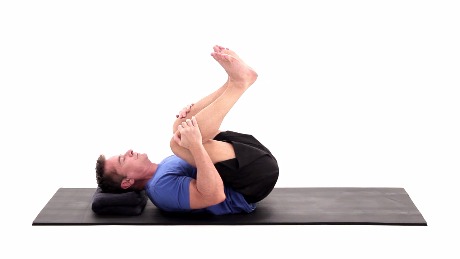
Modifications: Lie on your back and use a strap/towel to pull a straight leg up toward the ceiling. Flex your foot to deepen the stretch.

Butterfly Stretch

Sit with the soles of your feet touching and knees dropping down toward the floor. Perform deep breaths. Hold for 30-60 seconds as tolerated.

Modifications: Place pillows or yoga blocks under the knees to reduce strain on the hips, lean forward to deepen the stretch.

All stretches are designed to be gentle, but can be progressed if they become too easy. Stretches can be performed 1-3 times per day as needed.

Happy stretching!

Aloha ❤

The Final Round

The Final Round

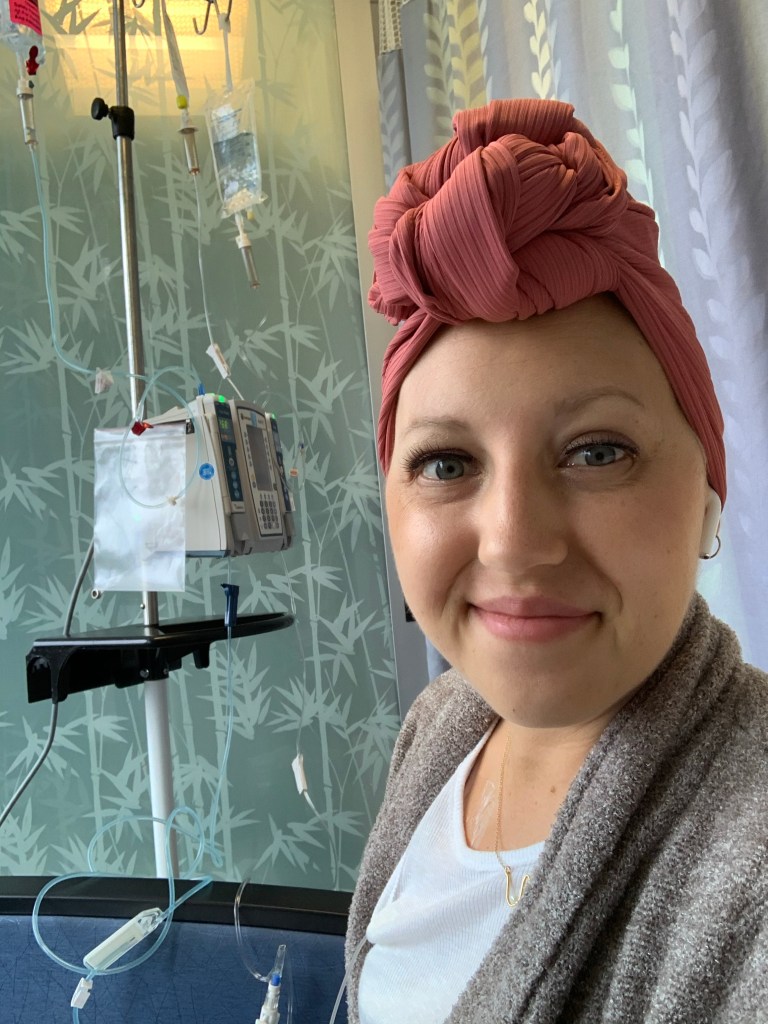
Celebrating with tears of joy today after finishing my last chemo yesterday. 16 rounds over 20 weeks. Conquering the Red Devil and getting through taxol without neuropathy are major victories, and I’m feeling so relieved to be DONE! I could not have done it without all of your support.

There’s still more treatment ahead, but I’m feeling I can manage anything now that chemo is behind me. I am so grateful to God and for all of the love of my family and friends and this great little breast cancer community I’ve found on Instagram that have gotten me through the past 5 months.

Last infusion day!

I will still receive two GCSF injections to boost my white blood cells this week as my oncologist doesn’t want me too immunocompromised in this COVID life we’re all living in. Then, I’ll re-test my labs in two weeks including a thyroid panel and vitamin D screen that I asked for. My oncologist has been really great about letting me lead my care to some extent and not just telling me what we’re going to do each week. Honestly, I wish every doctor were like that. I am so grateful for her and my whole team of docs who’ve listened to my concerns and took action immediately throughout this whole process.

Next week, I am scheduled to repeat my breast ultrasound, mammogram, and MRI to see where I’m at post-chemo. I am still unable to feel the tumor, but that doesn’t mean I don’t still have a bit of “scanxiety” about the slight possibility that there’s still something there or that the tumor will grow again being off chemo for several weeks before surgery. Please send prayers for good results!

No more ice booties & mittens! Bye taxol. Not gonna miss you.

I’ll meet with my surgeon on November 9, and will hopefully be able to get in for surgery before Thanksgiving. I’m still leaning toward breast-conserving surgery (a lumpectomy) which means I’ll do radiation for several weeks after recovering from surgery. I’ve done a lot of research on different types of surgeries and, besides my intuition telling me not to go for the more aggressive approaches, the research actually backs me up on that decision. For women with similar early-stage cancer to mine, the 5-year survival rate is 94.3% for breast-conserving surgery, 93.3% for mastectomy alone, and 83.7% for mastectomy with radiation.1

I am also biased in that I know that recovery from a mastectomy is really challenging and the complications can be much greater. To have further breast reconstruction on top of that would take multiple surgeries, and honestly, I’m just ready to move on from cancer in so many ways. I know it will always be a part of me, but treatment can end sooner than later if I go this route!

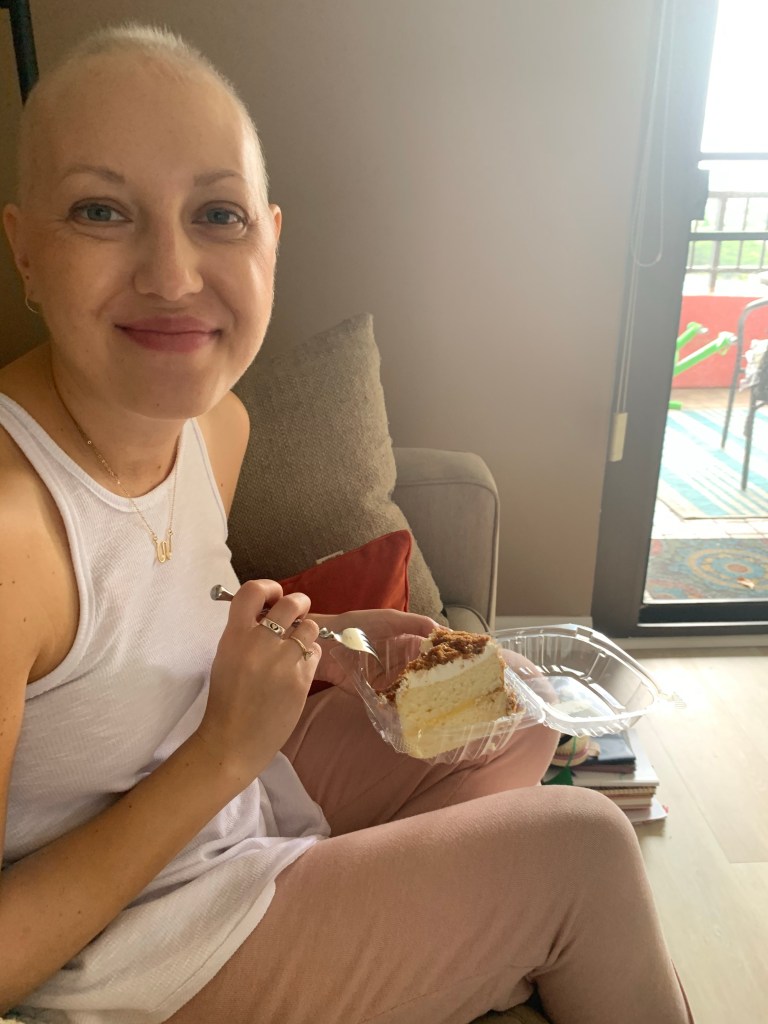
Celebrating with a little lemon crunch cake from Diamond Head Market – heaven! Cute hair, huh?

For now, I’m going to rest and celebrate being done with the hardest part of this little bump in the road. My mom will finally be down to visit in a few weeks and I’m looking forward to that! I wrote down a few things I want to remember from this experience so far and I’ll share a few of them with you here:

  • Faith in God is all you need to conquer anything.
  • The people you love are the most important thing in your life – tell them you love them often and mean it.
  • Find the immense joy in your daily life – there’s no need to search far and wide for it.
  • Spend time in nature – in quiet, being active, barefoot if you can.
  • Know and trust your body. Know that it’s strong and demands to be respected and understood.

Learning you have breast cancer at age 30 isn’t in anyone’s plans for life, and being diagnosed with one of the most aggressive forms of breast cancer doesn’t make it any easier. I want to remind you all that if you think something is off with your body, get it checked out. Don’t take no for an answer from your doctor. You’re not “too young.” You’re not overreacting. YOU are the only one that knows your body well enough to decide if something is off.

I love you all. Thank you for being with me on this ride.

Aloha ❤

Round 14

Round 14

Just wanted to give a quick update (for those of you who aren’t so interested in my pelvic floor posts)! I finished my 10th TC treatment today – my 14th chemo overall! Last week my white counts were so good I didn’t have to do any Zarxio injections, but this week my neutrophils were < 1.0 (which is normally the cutoff point to delay chemo until counts are more stable).

My wonderful oncologist called me to ask what I wanted to do. Obviously, neither of us want to delay chemo when I’m this close to being DONE. So we decided to re-test my counts this morning before treatment. Thankfully, my counts came back up to 2.08 (the power of prayer is real, my friends)!

So, we went ahead with chemo and so far all is well. I have two more rounds left. Still no signs of the tumor that got me into this mess. Repeat scans are scheduled for the last week of October, and I’m manifesting PCR (pathologic complete response – aka NO MORE CANCER)! Please say a few prayers for me if you will.

Once my scans come back, I’ll decide which surgery feels right to go forward with, and I’ll likely meet with a radiation oncologist to decide if radiation is necessary dependent on the surgery I choose. A more conservative surgery (lumpectomy or partial mastectomy) will likely require radiation, but potentially if I go with a modified radical mastectomy and there is no lymph node involvement, I may be able to do less (or ideally no) radiation treatments. As usual, I’ll have to weigh the pros and cons here. Wish me luck!

The steroids are giving me some chubby cheeks,
but life is good.

I will say that today I found myself reflecting on the past 4 1/2 months and realized that in all of the “getting after it,” I haven’t really given myself much credit for how intense this all has been and how much Justin and I have been through. I’m so thankful for my mom who calls everyday and my family and friends who check in and send cards and care packages. I’m so grateful for all of you, and I love you all so much! I honestly couldn’t do it without you.

Sending you all love and hope that you’re staying safe during these COVID times. Please remember to vote your little hearts out before or on November 3!

Aloha ❤

Chemo & Constipation

Chemo & Constipation

Chemo and constipation. Oh, poop! As a pelvic floor physical therapist and breast cancer thriver who is currently in the home stretch of chemotherapy, I can personally testify that constipation is no joke!

Having regular bowel movements during chemo is important to help detox the body of chemotherapy medications. In doing so, other side effects of chemo can be reduced. Backed-up bowels can contribute to or worsen nausea and vomiting. Unmanaged constipation during chemo can cause painful hemorrhoids or anal fissures that can put a patient at risk of infection while immunocompromised.

So how do we treat or avoid constipation during chemo? Well, let’s start with the basics and go from there…

What is constipation?

Typically, a person should expect to have a bowel movement anywhere from three times per day to three times per week. Stools should be soft and easy to pass (like #3 or 4 on the Bristol Stool Chart below). You may have constipation if your bowel movements are irregular (several days pass between BM’s) or your stool is very firm and is painful or requires straining to pass. Sometimes, it may feel that you’re not able to empty your bowels completely as well.

Borrowed from abc.net.au1

What causes constipation?

Generally, constipation is related to not getting enough water or fiber in your diet. It can also be from not getting enough exercise or from changing your routine when you travel. Unfortunately for some people going through cancer treatment, certain chemotherapy medications can cause gastroparesis (slow or paused digestion of food), which can lead to constipation.

How can you relieve constipation?

*Drink warm liquids (water, tea, coffee) first thing in the morning to kick start digestion and bowel movements, and be sure to drink plenty of water throughout the day (aim to drink half your body weight in ounces of water).

*Exercise! Take a short 10-15 minute walk or try these gentle stretches to stimulate the bowels.

*Eat plenty of fiber. Try to eat 25-30 grams of fiber daily with foods like broccoli, Brussels sprouts, beans, lentils, oatmeal or whole grains.

*Practice good toileting habits:

  • Use proper pooping posture – place your feet on a stool or rest your elbows on your knees to make it easier to empty the rectum.
  • Relax your pelvic floor muscles & breathe!
  • Don’t strain – come back later if you’ve got to push!
Borrowed from MacMillan Cancer Support3

*Try supplements and medications if the above fail. Ask your doctor about magnesium supplements, fiber/psyllium supplements (like Benefiber or Metamucil), stool softeners, or laxatives that might be helpful.

Remember: When it comes to constipation – consistency is key! Don’t scale back on your bowel routine because things begin to lighten up. During chemotherapy, you’ve got to stay on top of things to stay comfortable. If you need help getting a routine that works well for you, ask your doctor about a referral to a pelvic floor physical therapist in your area!

*This blog is part 1 of Pink October’s Pelvic Floor Series, a way to raise awareness of pelvic floor problems during cancer treatment and discuss sex & intimacy after a cancer diagnosis.

Aloha ❤

Round 11

Round 11

Just wanted to leave a quick update today – I completed my 7th paclitaxel/carboplatin infusion yesterday which is my 11th cycle of chemo overall. I can now officially count down on 1 hand the number of infusions I have left. My white counts continue to be iffy and were a bit low this week so two more GCSF injections it is! Fortunately, with reduction of the paclitaxel dose and adding milk thistle supplements, my liver counts are improving so I’m thankful for that!

Otherwise, all is well. Trying to get enough sleep and exercise to keep my immune system as strong as possible. I probably should write a whole post on sleep at some point here…stay tuned! Also, our governor finally announced that he’ll be lifting the transpacific travel quarantine beginning October 15, so that means my family can finally come down to visit without the hassle of having to quarantine for 2 weeks! Looking forward to seeing my mama ❤

Justin and I watched The Social Dilemma on Netflix last week. I highly recommend it and would love to discuss it with anyone who has thoughts on the good and bad effects of social media on the people in our society. It’s an important ethical discussion and may make you realize why there is so much division in our nation right now. Let me know what you think!

For those of you still exercising at home, here’s a link to a beginner/intermediate Pilates class that I taught last week for my sister. Justin bought me the cute rainbow tapestry in the background so I was inspired to create a routine around rainbows! Enjoy!

Hope all is well and everyone is staying healthy! Please continue to wear a mask to protect your kupuna (elderly) and those with health conditions that put them at high risk. We’re not out of the woods with COVID-19 yet so please be considerate of those around you!

Aloha ❤

Saving your Fertility during Cancer Treatment

Saving your Fertility during Cancer Treatment

When the last thing you expect is to be diagnosed with breast cancer at age 30 (or under 40, honestly), your desire to have (or not have) future children becomes very clear suddenly. I may have been the person who was in no rush to have kiddos, but I took it pretty hard knowing I was about to start chemotherapy that would significantly affect my ability to reproduce, possibly even making it impossible to conceive naturally.

In all the rush of my initial diagnosis, I wasn’t able to write about options to preserve fertility during chemotherapy. Honestly, it was some of the most emotional decision-making I had to do at the time, so maybe I put it off because it was all very overwhelming! Ultimately, I made two important decisions in order to help save my fertility, which I’ll share below with a few other important concepts regarding fertility preservation.

Chemotherapy & Its Effect on the Ovaries

First, you may wonder how exactly chemotherapy affects your ovaries. Chemo medications are designed to target and kill rapidly dividing cancer cells. Unfortunately, those meds can’t differentiate between rapidly dividing cancer cells and rapidly dividing normal cells in the skin, digestive tract, and reproductive organs. Just as you’d expect to see some side effects like skin/nail changes or mouth sores, we expect to see some attack on the ovaries as they also have a known cycle of cell turnover (a.k.a. ovulation). Thus, if you’ve never had children, and your cancer is stable enough to delay treatment for a few weeks to a month, your doctor should recommend all of the fertility-preservation options they have available. If they don’t offer, you better ask!

Egg Preservation Prior to Active Treatment

I was referred to a fertility specialist/reproductive endocrinologist who was excellent. I had the option to extract eggs (unfertilized) or embryos (fertilized) which would be frozen by a process called vitrification until I need them at a later date. I chose to freeze eggs as research now shows no major difference in later IVF success rates whether an egg or embryo is used, per my physician.

The whole process is timed with the menstrual cycle, so specific hormones are injected during the follicular phase (when the ovarian follicles that store the eggs begin to grow and mature) beginning on day 2 or 3 of menstruation. The fertility specialists monitor follicle growth and count every few days with a pelvic ultrasound and bloodwork. As the follicles mature, indicating ovulation to be close, a different medication is given to delay ovulation until the mature eggs can be retrieved.

The retrieval process is done under light anesthesia in the fertility office. A needle is directed into each ovary through the back of the vaginal vault. Suction is used to retrieve the mature follicles, and after inspection of all eggs to determine which are viable, the eggs can be fast frozen (“vitrified”) and stored in an egg bank until needed. Voila! Now, I have a back-up option post-cancer if I’m unable to conceive naturally! Thank goodness for modern medicine.

Throughout all of that, the worst side effects I had were some moderate bloating and cramping after the egg retrieval. I was also given a separate hormone during the follicle-stimulating phase that helped to avoid an estrogen spike so my mood remained stable throughout (I’m sure my husband appreciated that I wasn’t a hormonal monster through it all). Despite having to delay chemo about 4 weeks to complete this process (remember, they like to time it with your natural cycle), I have no regrets on completing this first for peace of mind alone.

The Cost of Fertility Preservation

Whoever my future kids are, I hope they know I reallllllyyyy want them, because fertility options are not cheap! Most insurances do not cover egg/embryo preservation if you do not have a diagnosis of “infertility” even if you get cancer that you never wanted which might render you infertile… (I’ll refrain from saying any more). The egg retrieval process alone usually costs somewhere around $10k which doesn’t include the annual storage fee for the eggs (mine is about $700 per year).

Fortunately, there is a great option for cancer thrivers through the Livestrong Foundation. My fertility specialist had me begin paperwork to apply for their grant which covers about 1/3 of the total cost if you qualify (most cancer patients do unless your insurance covers). Ask your fertility doc if this is an option for you!

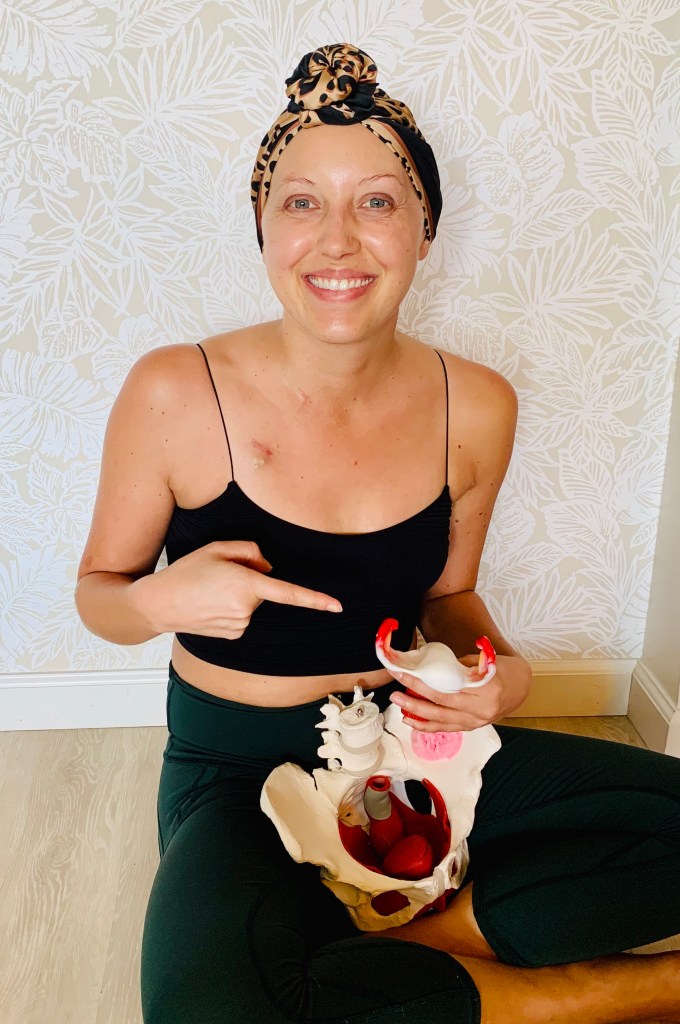
Only a Pelvic PT would have their very own pelvis model at home! #SaveTheOvaries

Options to Preserve Ovarian Function during Chemo

Besides the pre-treatment egg retrieval, my medical oncologist also recommended that I go on a gonadotropin-releasing hormone (GnRH) agonist called Zoladex during chemo. This is a monthly injection that essentially halts ovarian function by blocking GnRH (a hormone released from the hypothalamus in the brain that triggers the release of follicle-stimulating and leutinizing hormones which act directly on the ovaries). The cancer community “lovingly” refers to this state of no periods as “chemopause” because it is essentially a medically-induced menopause complete with joint aches and hot flashes. I have been lucky that my side effects have been mild, and I’m very thankful to give my reproductive system this brief pause while I kick cancer’s ass.

After treatment, once I get the ok from docs, I’ll still be able to try to conceive naturally. The chances of conceiving naturally are lower for those of us who’ve gone through chemo or radiation, but it’s definitely possible! If I need a little help, then I’ve got a few tiny frozen eggs lined up for further fertility treatments down the line.

It’s Okay to Be Concerned about Your Fertility

I’m thankful that my OB/GYN and oncology team were very supportive about fertility preservation prior to starting active treatment. For many women, hearing your plans for a family will likely have to change after cancer is devastating. I didn’t expect to be so emotional about this whole process, to be honest. I’ve always wanted kids some day, but I wasn’t a person who constantly planned my life around it. Even still, early into my diagnosis, I found myself mourning the loss of my potential fertility more than the fact that I could die from cancer. I don’t believe it does anyone any good to stop planning for the future and let cancer have all the control, so be sure to tell your doctors how important saving your reproductive health is to you!

My heart goes out to anyone reading this and going through the same decision-making process. My heart goes out to those of you reading this who are struggling to conceive even without a cancer diagnosis. I’m so thankful to have so many options to consider and know that, in the right time, children will be a part of my journey, too. For those of you just starting out on your cancer and fertility journey, be sure to ask your doctors what the best options are for you!

Aloha ❤